
Seven days is one of the best amounts of time to see Morocco. In fact, it is long enough to reach the Sahara, wander two or three imperial cities, and cross the High Atlas Mountains, all without the rushed, one night stand feeling that shorter trips often bring. At the same time, a week is short enough that you will not spend half your holiday driving between destinations you barely remember afterward.
We run tours across Morocco every week from our base in Marrakech, so this is not a route we pulled together from other people’s blog posts. Instead, this is the exact 7 day Morocco itinerary we build for guests who want to see the country’s biggest highlights in one clean, well planned loop. There is no filler, no backtracking, and no guessing about what actually fits into a week, because we drive these roads ourselves and we know exactly what a week can hold.
Below, you will find a full day by day breakdown, honest notes on drive times, tips for choosing accommodation, and answers to the questions travelers ask us most often before they book. By the end of this guide, you should know exactly what a private 7 day Morocco tour looks like and whether it fits the trip you have in mind.
Is 7 Days Enough for Morocco?
This is easily the most common question we get from first time visitors, so let’s answer it directly. Yes, one week gives you enough time to see Morocco properly, as long as your route is planned with intention rather than ambition.
Morocco is a large country, roughly the size of California, and the temptation to squeeze in “just one more city” is real. However, cramming too many stops into seven days usually backfires. You end up spending entire mornings in the car, checking into hotels after dark, and leaving each place before you have really settled into it. A tightly built itinerary avoids that trap by choosing a smaller number of destinations and giving each one enough breathing room.
The itinerary in this guide focuses on five destinations plus one unforgettable night in the desert: Casablanca, Rabat, Chefchaouen, Fes, the Sahara Desert near Merzouga, and Marrakech. That combination hits the country’s essentials, imperial history, mountain scenery, a completely different culture in the blue city, and the dunes of the Sahara, without turning your holiday into a driving marathon.
If you are worried that a week is simply too short, keep this in mind. Most travelers who take this exact route tell us afterward that the pace felt comfortable, not rushed. That said, if you would prefer more breathing room, or if you want to add a coastal stop like Essaouira, extending to nine or ten days is easy to arrange, and we cover that option later in this guide.
Why Spend One Week in Morocco?
Before we get into the day by day plan, it helps to understand why this particular week works so well. Morocco rewards travelers who see contrast, and a 7 day itinerary is long enough to deliver several sharp contrasts back to back.
You will discover Morocco’s diverse landscapes.
Within a single week, you will stand on the Atlantic coastline, walk through cedar forests in the Middle Atlas, drive along a palm lined desert valley, and climb the golden dunes of the Sahara. Few countries pack this much geographic variety into a single week long trip, and Morocco does it without long flights between stops, since everything connects by road.
You will experience authentic Moroccan culture, not a tourist version of it.
From the tanneries of Fes to a Berber tent under a genuinely dark desert sky, this itinerary avoids the trap of only visiting places built for visitors. Instead, it moves through real working cities and real desert communities, so what you see is what locals actually live with, not a performance staged for cameras.
You will explore historic imperial cities, each with its own personality.
Casablanca feels modern and business focused. Rabat feels calm and administrative. Fes feels ancient and layered, almost maze like. Marrakech feels loud, colorful, and a little chaotic in the best way. A week gives you enough time in each city to actually notice these differences, rather than blurring them together.
You will travel comfortably, at your own pace, with a private guide.
Because every day of this itinerary runs with a private driver rather than a shared bus, you decide when to linger at a viewpoint and when to move on. If you want an extra hour in the Fes medina, you simply take it. If you would rather skip a stop that does not interest you, that is fine too.
Before You Go: Planning Your 7 Day Morocco Trip
A little preparation goes a long way, so before we dive into the itinerary itself, let’s cover the practical side of planning your trip.
Where to fly into?
Most international flights land in Casablanca, which also happens to be the starting point of this itinerary. If your flight arrives in Marrakech instead, we simply run the route in reverse, starting in the Red City and ending in Casablanca. Either direction works equally well, so choose whichever flight is cheaper or more convenient for your dates.
Best time to visit.
Spring, from March through May, and autumn, from September through November, offer the most comfortable temperatures for both the cities and the desert. During these months, daytime temperatures generally sit in a pleasant range, and desert nights are cool without becoming uncomfortably cold. Summer can be intense in the Sahara, with daytime heat that some travelers find draining, while winter brings cold nights in the desert and the mountains, so pack accordingly if you travel between December and February.
What to pack?
Because this itinerary moves through mountains, desert, and coastal air within a single week, layers matter more than any single item. Bring a light jacket for cool desert evenings, comfortable walking shoes for medina streets and camel treks, a scarf or shawl for visiting mosques and mausoleums, and sun protection for the Sahara. A reusable water bottle is genuinely useful too, since staying hydrated in the desert matters more than most first time visitors expect.
Currency and connectivity.
Morocco uses the Moroccan Dirham, and while cards work in most hotels and larger shops, cash is still useful in medinas and smaller towns. A local SIM card is easy to buy on arrival in Casablanca and gives you reliable data for the entire week, which is handy for staying in touch with your driver guide and sharing photos as you go.
With the planning basics covered, let’s walk through exactly what each day of this itinerary looks like.
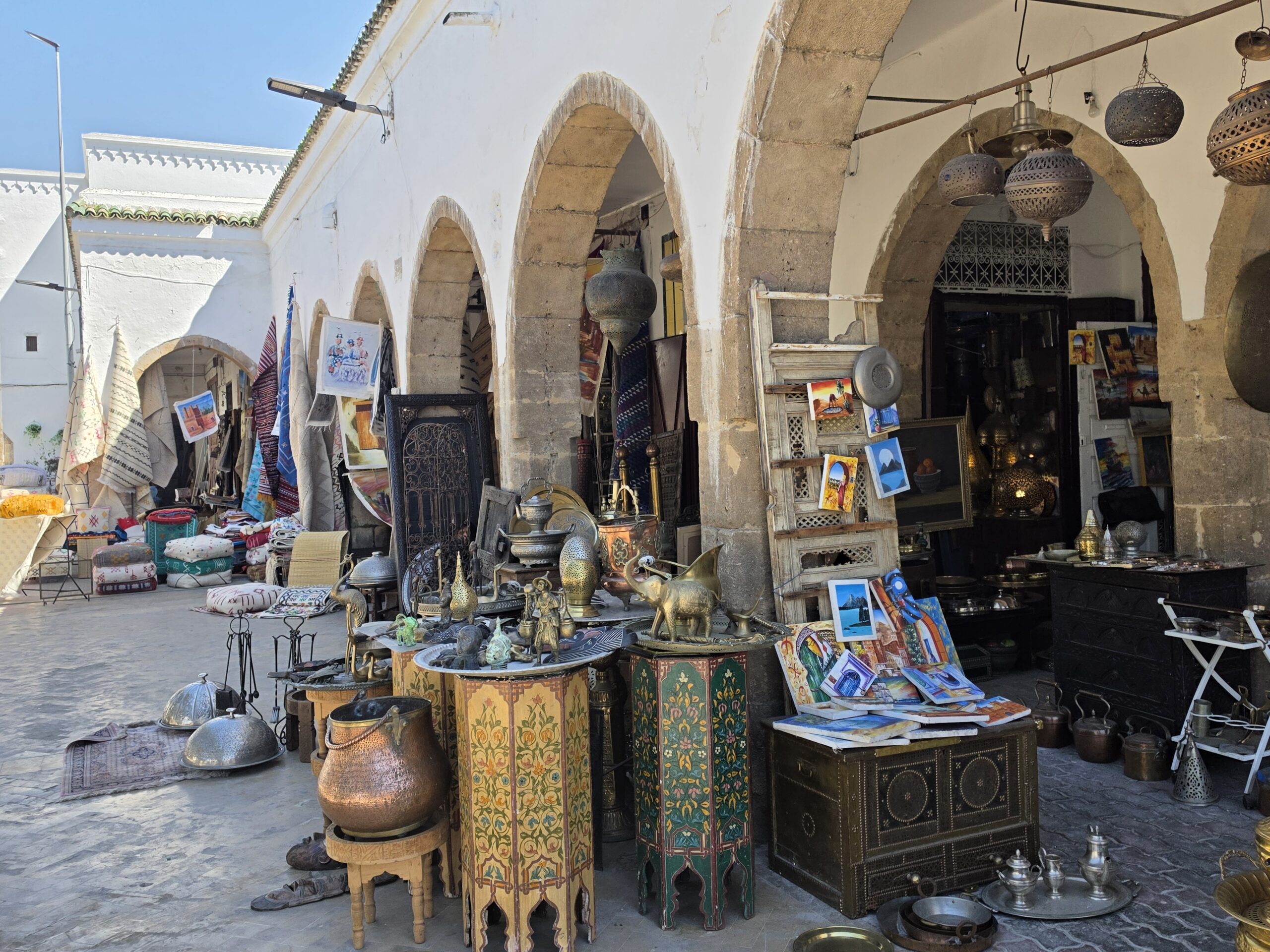
Your Day by Day 7 Day Morocco Itinerary
Day 1: Casablanca and Rabat
Your trip begins the moment you land in Casablanca. After we pick you up at the airport, we head straight into the city so you can start exploring right away rather than losing your first day to jet lag and a hotel room.
The undisputed highlight of Casablanca is the Hassan II Mosque, one of the largest mosques in the world and one of the few in Morocco that allows non Muslim visitors inside. Its minaret rises higher than almost any other religious structure on the planet, and the interior, with its carved cedar ceilings and hand cut zellige tilework, genuinely earns the hype. Afterward, take a relaxing walk along the Corniche, where the Atlantic breeze and a strip of cafes give you a first, easy introduction to Moroccan daily life.
From Casablanca, we then continue to Rabat, Morocco’s elegant and comparatively quiet capital. Because Rabat carries far less tourist traffic than Marrakech or Fes, it offers a calmer, more authentic first impression of the country. Here, you will see the unfinished Hassan Tower, the Mausoleum of Mohammed V with its ornate green roof tiles, and the whitewashed Kasbah of the Udayas overlooking the river mouth. As evening falls, you will check into your riad or hotel, ready for an early start the next morning.
Day 2: Chefchaouen
On day two, we leave the coast behind and head north into the Rif Mountains toward Chefchaouen, the famous blue city. The drive itself is scenic, winding through green hills that feel almost Mediterranean, quite different from the desert landscapes waiting later in the week.
Chefchaouen genuinely lives up to its reputation. Every wall, staircase, doorway, and flowerpot seems to be painted in some shade of blue, from pale sky tones to deep indigo, and wandering the old town feels less like sightseeing and more like walking through a painting. Because the town is compact and mostly closed to cars, this is one of the most relaxed days of the entire itinerary. Spend the afternoon browsing handwoven textiles and local goat cheese in the medina, then find a rooftop cafe for mint tea as the light turns golden over the mountainside. Chefchaouen also has a noticeably different pace and culture compared to the rest of Morocco, shaped by its Andalusian and Rif Berber influences, which makes it a genuinely worthwhile detour rather than just a photo opportunity.
Day 3: Fes Medina
From Chefchaouen, we travel inland to Fes, Morocco’s spiritual and cultural capital and, in our opinion, the single most fascinating city on this entire route.
Fes el Bali, the old walled medina, is believed to be the largest car free urban area in the world, and once you step through Bab Bou Jeloud, the famous blue gate, you will understand why. Inside, over nine thousand narrow alleys twist between mosques, madrasas, and workshops that have operated in the same spots for centuries. Your local guide will lead you through the highlights so you do not get lost, including the Chouara Tanneries, where leather has been dyed by hand since the medieval period, and the Al Qarawiyyin University, widely recognized as one of the oldest continuously operating universities in the world.
Because Fes rewards slow exploration, we recommend giving this city a full day rather than rushing through it. Wander through the metalworking souks, watch artisans carve cedar wood in tiny workshops, and stop for a proper Moroccan lunch in a converted riad courtyard. By evening, you will have a much deeper understanding of Moroccan history than a quick pass through would ever provide.
Day 4: Ifrane, the Cedar Forest, and Merzouga
Day four is a transition day, and honestly, one of our favorites, since the landscape changes dramatically over the course of a single drive. Leaving Fes, the road climbs into the Middle Atlas Mountains toward Ifrane, a town so different from the rest of Morocco that people nickname it “Morocco’s little Switzerland.” With its sloped roofs, stone chalets, and cool mountain air, Ifrane looks like it was transplanted from the Alps.
Just beyond Ifrane lies the Cedar Forest of Azrou, home to wild Barbary macaques that live freely among the trees. Because these monkeys are used to passing vehicles, they often approach the road itself, and watching them move through the branches is one of the most fun, low effort highlights of the whole week, particularly for families traveling with children.
From the cedar forest, the route descends toward the Ziz Valley, a long green ribbon of palm groves cutting dramatically through dry, rocky hills. This valley offers one of the most photogenic drives in the country, and it also serves as a preview of the desert scenery waiting ahead. By late afternoon, you will arrive in Merzouga, the small desert town that serves as the gateway to Erg Chebbi, Morocco’s tallest and most famous dune field.
Day 5: Sahara Desert Experience
This is the day most travelers book the entire trip for, and it rarely disappoints. In the late afternoon, camels carry you out across the dunes of Erg Chebbi as the sun begins to drop toward the horizon. Because the dunes shift color dramatically as the light fades, first gold, then orange, then a deep, almost crimson red, this camel trek genuinely feels like one continuous, unfolding photograph.
Once you reach camp, dinner is served under a genuinely staggering number of stars, since Merzouga sits far from any significant source of light pollution. Depending on your accommodation choice, you might spend the evening around a fire listening to traditional Berber drumming, or simply lying back in the sand, picking out constellations you have never noticed at home. Many guests tell us this single night in the desert becomes the moment they describe most when they get home, even after seeing imperial palaces and UNESCO sites earlier in the trip.
Early the next morning, before the desert heat sets in, we recommend waking before sunrise. Watching the dunes shift from deep blue to soft pink to bright gold, while the desert is still cool and silent, is genuinely one of the most memorable moments Morocco has to offer.
Day 6: Todra Gorge and Ait Ben Haddou
After a desert sunrise and a final breakfast at camp, the journey continues toward Todra Gorge, where sheer rock walls rise more than three hundred meters on either side of a narrow canyon road. Because the gorge is easy to walk and offers dramatic photo opportunities at almost every angle, it makes an ideal midday stop to stretch your legs after the long drive out of the desert.
From Todra Gorge, the route continues through the Dades Valley, known for its rose gardens and its strange, eroded rock formations nicknamed “monkey fingers” by locals. Eventually, you will reach Ait Ben Haddou, a UNESCO World Heritage kasbah that has appeared in more films and television series than almost any other location in Morocco, including Gladiator, Game of Thrones, and Lawrence of Arabia. Walking across its ancient clay walls as the afternoon light hits the fortress genuinely feels cinematic, and honestly, it should, given how much of that cinema was filmed right where you are standing.
Day 7: Marrakech
On your final day, the route crosses the High Atlas Mountains via the Tizi n’Tichka Pass, which climbs above two thousand two hundred meters and offers sweeping views across the valleys below. Roadside stalls selling almonds, geodes, and handwoven rugs give you a last chance to interact with mountain communities before you descend into Marrakech.
Marrakech, the Red City, delivers a completely different energy from anything you have experienced earlier in the week. Jemaa el Fnaa square transforms throughout the day, from a relatively quiet market in the morning to a full sensory overload by evening, filled with storytellers, musicians, and food stalls. Beyond the square, you will have time to explore the ornate Bahia Palace and the electric blue Majorelle Garden before a farewell dinner brings your 7 day Morocco itinerary to a close.
What’s Included in Your Morocco Journey
We build every 7 day Morocco tour around comfort, flexibility, and genuine local expertise, and each departure includes the following as standard.
- Private transportation throughout your trip, using an air conditioned 4×4 or a comfortable minivan, depending on your group size.
- A professional, English speaking local driver guide who stays with you for the entire week, rather than handing you off between cities.
- Accommodation in riads, hotels, and a desert camp, selected for character and comfort rather than generic chain hotel sameness.
- Daily breakfast, plus selected dinners, including your desert camp dinner under the stars.
- Camel trekking in Erg Chebbi, guided by experienced local handlers who know the dunes well.
- A fully flexible, customizable itinerary, since we build every trip around the traveler, not a fixed template.
Because we run this route ourselves, we can adjust almost any detail before you book, whether that means upgrading a hotel category, adding an extra night somewhere, or removing a stop that does not interest you.
Choosing Your Accommodation Style
One question we get constantly is what kind of accommodation to expect, so let’s break this down by category, since the right choice really depends on your travel style and budget.
Classic comfort. This tier includes well reviewed riads and hotels with private bathrooms, reliable air conditioning, and genuinely comfortable beds, though without the extra flourishes of higher categories. For travelers who care more about seeing Morocco than about thread count, this option delivers excellent value.
Affordable luxury. Stepping up a level, this tier introduces boutique riads with courtyard pools, rooftop terraces, and more personalized service, along with a private, glamping style desert camp featuring proper beds instead of basic mattresses. Many couples and small groups find this the sweet spot between comfort and cost.
Deluxe luxury. At the top tier, expect five star riads and hotels with spa facilities, and a premium desert camp with private en suite tents, hot showers under the stars, and genuinely gourmet Moroccan dining. This category suits honeymooners, anniversary trips, or travelers who simply want to treat themselves.
Whichever tier you choose, we select every property personally, based on location, character, and guest reviews, rather than simply booking whatever is cheapest or most convenient for us.
Private Tour vs Group Tour
Before booking, it is worth understanding why we build this itinerary as a private tour rather than a shared group experience, since the difference genuinely changes how your week feels.
On a group tour, you share the vehicle and the schedule with strangers, which means the bus leaves when the group is ready, not when you are. If half the group wants to linger in a souk while you would rather move on, you are stuck waiting either way. Meals, photo stops, and even bathroom breaks all become group negotiations.
A private tour removes all of that friction. Because it is just you, your travel companions, and your driver, you decide the pace entirely. Want an extra hour in the Fes medina? Take it. Prefer to skip a shop your driver suggests? Simply say so. Because private tours also travel in smaller vehicles, you avoid the long pickup and drop off loops that large buses require when collecting multiple hotel guests across a city.
That said, private tours generally cost more per person than group departures, particularly for solo travelers. If budget is your primary concern and flexibility matters less, a group tour can still deliver a solid Morocco experience. However, for most travelers planning a once in a lifetime week in Morocco, the extra comfort and control of a private tour tends to be well worth the difference.
How to Customize This Itinerary
Because every traveler wants something slightly different from Morocco, we rarely run this itinerary exactly the same way twice. Here are some of the most common adjustments we make.
For families. We slow the pace slightly, add extra rest stops during long drives, and choose desert camps with a bit more space for children to move around. The Cedar Forest monkey encounter on day four is consistently a highlight for younger travelers.
For honeymoon couples. We usually recommend upgrading to the deluxe luxury desert camp for a private, romantic dinner setup, along with a boutique riad in Marrakech featuring a private plunge pool or rooftop terrace.
For adventure seekers. We can add sandboarding and a 4×4 desert safari near Merzouga, or extend the itinerary to include a short hike in the Atlas foothills before continuing toward the desert.
For travelers who want more time. If seven days feels tight, extending to nine or ten days lets us add a coastal stop in Essaouira, or an extra night in Marrakech to explore at a more relaxed pace. Alternatively, some travelers prefer to shorten certain driving days and instead add an overnight stop in Ouarzazate, sometimes nicknamed the Hollywood of Africa for its film studios, before continuing to Ait Ben Haddou.
Because we design the itinerary around you rather than the other way around, none of these adjustments require starting from scratch. We simply build them into the plan before your trip begins.
What our travellers say




Why Book With Tilila Travel?
We run these exact routes ourselves, week after week, which means our recommendations come from direct, current experience rather than outdated guidebook information. Our team lives in Morocco, drives these roads constantly, and knows precisely which desert camps genuinely deserve their reputation and which mountain viewpoints are worth the extra ten minutes off the main road.
Local Morocco experts:
who plan every itinerary around firsthand experience, not a copied template.
Tailor made experiences:
We happily add a day in Essaouira, extend your time in the Sahara, or swap out any stop that does not interest you.
Transparent pricing: with no hidden costs added after you book.
Round the clock travel support:
by WhatsApp, both before your trip and while you are on the road with us.
If one week feels like a stretch for your schedule, our Morocco 5 Day Itinerary covers a shorter version of this same style of trip, while still reaching the Sahara. On the other hand, if you have more time available, our Morocco Multi Day Tours From Casablanca and Morocco Multi Day Tours From Marrakech pages list longer itineraries running nine, ten, twelve, and even fifteen days. In fact, this exact 7 day route is also available as a set departure on our Amazing 7 Days Tour from Casablanca to Marrakech page, if you would rather book a ready made version.
For travelers who prefer designing something entirely from scratch, our Tailor Made Morocco Multi Day Tours page walks through exactly how a custom itinerary comes together, while our Morocco Itineraries hub lists twenty different route options if you would like to compare before deciding. You can also browse our complete Best Morocco Tours collection, or read more about who we are and how we work on our Morocco Travel page. Finally, if your dates take you through Fes toward Marrakech instead of this Casablanca based loop, our Private Fes to Marrakech Tour covers that alternative route in full detail.
Frequently Asked Questions: Morocco the Perfect 7 Day Itinerary
Is 7 days enough to visit Morocco?
Yes, one week gives you enough time to see Morocco’s main highlights, including two or three imperial cities and the Sahara Desert, as long as the route stays focused rather than trying to cover the entire country.
Which cities should I visit in one week?
For a well balanced trip, we recommend Casablanca, Rabat, Chefchaouen, and Fes, combined with a night in the Sahara Desert near Merzouga and a final stop in Marrakech. Together, these destinations cover Morocco’s essential experiences without overloading your schedule.
Can I include the Sahara Desert in a 7 day trip?
Absolutely. This itinerary includes an overnight stay in a desert camp near Merzouga, complete with a camel trek across the dunes of Erg Chebbi at sunset and a sunrise the next morning.
Is this itinerary customizable?
Yes, entirely. Every stop, hotel category, and daily pace can be adjusted to fit your preferences, whether you are traveling as a couple, a family, or a group of friends.
Is this a private tour or a shared group experience?
This is a private tour. You travel with your own driver and vehicle throughout the week, rather than joining a shared bus with other travelers.
What type of accommodation is included?
Your trip includes a mix of riads, hotels, and a desert camp, with three tiers available, classic comfort, affordable luxury, and deluxe luxury, so you can choose the level that fits your budget and style.
Are airport transfers included?
Yes. Pickup from Casablanca and drop off in Marrakech are both included as part of your itinerary, and we can reverse this if your flights work better the other way around.
What vehicle will we travel in?
Depending on your group size, you will travel in either an air conditioned 4×4 or a comfortable minivan, always driven by the same guide throughout your trip.
Are meals included in the itinerary?
Daily breakfast is included throughout, along with selected dinners, most notably your dinner at the desert camp under the stars.
Is Morocco safe for tourists?
Yes, Morocco is a well established and popular travel destination, and traveling with a private local driver adds an extra layer of comfort and support, particularly for first time visitors.
Is this itinerary suitable for families with children?
Yes. The pace, rest stops, and accommodation choices can all be adjusted for families, and the Cedar Forest monkey encounter on day four is consistently a favorite moment for younger travelers.
Is this route good for honeymoon couples?
Yes, many couples choose this exact itinerary for their honeymoon, and we frequently arrange upgraded desert camp accommodation and private dining for the occasion.
What is the best month to visit Morocco?
Spring, from March through May, and autumn, from September through November, offer the most comfortable weather for both the cities and the desert, with October often considered the single best month overall.
Why choose Tilila Travel over another operator?
Because we are a Marrakech based operator running these exact routes ourselves, our recommendations come from firsthand, current experience rather than secondhand information, and we offer transparent pricing alongside fully customizable itineraries.
How do I book my Morocco tour?
Simply reach out through our contact page or message us directly on WhatsApp, and our team will build a free, personalized itinerary and quote based on your travel dates and preferences.
Start Planning Your 7 Day Morocco Adventure
Seven days, five destinations, and one desert night you will talk about for years afterward, that is what this itinerary delivers. Contact us for a free, personalized itinerary, or message our team on WhatsApp for an instant response.
- Request a Free Customized Itinerary
- Speak With a Morocco Travel Expert
- Get an Instant Quote
- Reserve Your Morocco Holiday Today