
Every traveler wants something a little different — that's exactly how we plan.
Tell us how much time you have, where you're starting from, and what draws you to Chefchaouen — the mountains, the photography, the quiet, the handicrafts, or simply a break from the bigger cities. We'll build a private itinerary around that, from your arrival to your final transfer.
Plan Your Morocco Tour NowA complete Morocco desert packing list includes lightweight breathable clothing for the day, warm layers for cold desert nights, sturdy closed-toe shoes, a scarf for sun and sand, sunglasses, sunscreen, a portable charger, and basic health essentials. Pack for two climates in one trip, since Sahara days run hot while desert nights drop close to freezing.
Planning what to bring can feel harder than planning the trip itself. However, once you understand how Morocco’s climate actually shifts between the mountains, the cities, and the Sahara, packing becomes simple. Below, we walk through every category you need, from clothing to electronics, so you leave home fully prepared and never underpacked or overpacked again.
Why Packing Properly for the Morocco Desert Matters?
The Sahara rewards travelers who prepare well and frustrates those who don’t. Because the desert environment swings between extremes, the right packing list directly shapes how comfortable your trip feels.
Extreme Temperature Changes
Daytime temperatures in the Sahara often climb well above 30°C, yet nights can drop close to freezing, especially between November and February. As a result, a single outfit never works for the whole day. Instead, you need layers you can add and remove as the sun rises and falls.
Comfort During Camel Trekking
Camel trekking into the dunes involves sitting, walking through sand, and climbing on and off your camel. Loose, breathable clothing and proper footwear make this experience far more enjoyable, while tight or restrictive clothing quickly becomes uncomfortable.
Cultural Considerations
Morocco remains a culturally conservative country outside major resorts. Therefore, modest clothing, especially for women, shows respect for local customs and helps you move through villages and markets without unwanted attention. Our full Morocco travel FAQs page covers exactly what to wear across cities, mountains, and desert regions in more detail.
Quick Morocco Desert Packing Checklist
Before we go deeper into each category, here’s a fast overview you can scan in under a minute.
| Category | Key Items |
|---|---|
| Clothing | Lightweight layers, long sleeves, warm jacket, scarf |
| Footwear | Closed-toe walking shoes, sandals, socks |
| Toiletries | Sunscreen, lip balm, wet wipes, hand sanitizer |
| Electronics | Power bank, universal adapter, camera protection |
| Documents | Passport, travel insurance, printed bookings |
| Health Essentials | First aid kit, medication, rehydration salts |
Now, let’s break each of these down properly.
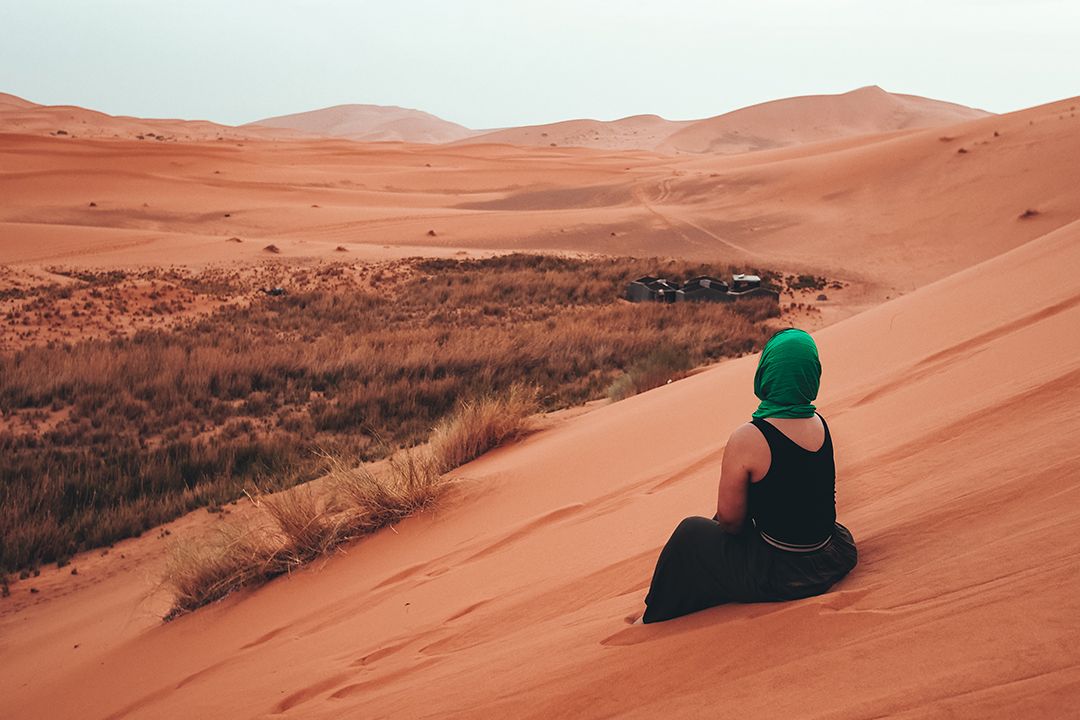
What Clothes Should You Wear in the Sahara Desert?
Clothing forms the backbone of any Morocco desert packing list, and getting it right solves most comfort problems before they start.
Lightweight Clothing for Daytime Heat
Choose breathable fabrics like cotton or linen for daytime wear. Loose-fitting shirts and trousers keep you cool while still protecting your skin from direct sun, which matters more than shorts or tank tops in desert conditions.
Warm Layers for Desert Nights
Pack at least one warm layer, such as a fleece or light jacket, for evenings at the camp. Because temperatures fall quickly after sunset, many travelers underestimate just how cold the Sahara gets once the sun disappears.
Breathable Fabrics That Actually Work
Moisture-wicking clothes perform better than heavy cotton in extended heat, particularly during long driving days between Marrakech and Merzouga. If you’re combining city time with desert nights, our luxury Sahara Desert tours guide also outlines what a typical multi-day route looks like, which helps you plan clothing quantities around your exact itinerary.
Respectful Clothing Choices
Long sleeves, longer skirts or trousers, and tops that cover the shoulders remain the safest choice throughout Morocco, not just in the desert. This approach keeps you comfortable in villages, markets, and religious sites alike.
Best Shoes for a Morocco Desert Tour
Footwear matters more than most travelers expect, especially once sand and uneven terrain enter the picture.
Walking Shoes for Rocky and Sandy Terrain
Sturdy, closed-toe walking shoes protect your feet from hot sand, sharp rocks, and rough kasbah paths. Choose a pair you’ve already broken in before the trip, since new shoes often cause blisters on long walking days.
Sandals for Camp and Downtime
Sandals work well around the desert camp itself, where the ground is softer and cooler in the evening. That said, avoid wearing sandals during the actual camel trek or any dune climbing.
The Right Footwear for Camel Riding
Closed shoes protect your feet better than sandals once you’re on the camel and walking through loose sand at the dunes. Consequently, most guides recommend switching into your walking shoes specifically for the sunset and sunrise camel treks.
Essential Accessories for the Sahara
A few small accessories make a surprisingly large difference in comfort once you’re actually standing on the dunes.
Wide-Brim Hat
A wide-brim hat protects your face, neck, and ears from direct sun far better than a baseball cap. Because desert sun reflects off the sand as well as coming from above, a hat with real brim coverage matters here more than in the city.
Sunglasses
Bring polarized sunglasses to cut glare from the sand, which can be surprisingly intense during midday hours. This small item also protects your eyes during windy stretches, when fine sand blows across the dunes.
Scarf or Shemagh
A lightweight scarf serves multiple purposes: sun protection, wind protection, and a quick head covering when visiting religious sites. Many travelers consider it the single most useful accessory on their entire Morocco desert packing list.
Gloves for Winter Desert Trips
If you’re visiting between December and February, pack thin gloves for early morning dune walks and the sunset camel trek, since desert wind chill catches most winter travelers off guard.
Travel Toiletries You Should Never Forget
Desert camps and rural stops don’t always stock familiar brands, so bringing your own toiletries avoids unnecessary stress mid-trip.
Pack sunscreen rated SPF 50, since desert sun exposure is stronger and more constant than in the city. Add lip balm with SPF, because dry desert air chaps lips quickly, along with hand sanitizer and wet wipes for stops without reliable washroom access. A small travel towel also comes in handy at both riads and desert camps, particularly if you plan any hammam visits along the way.
Electronics and Camera Gear for the Sahara
The Sahara offers some of the best photography opportunities in Morocco, so it’s worth protecting your gear properly before you arrive.
Portable Charger
A portable charger keeps your phone and camera running during long driving days, especially since outlets aren’t always available at every stop along the route.
Power Adapter
Morocco uses Type C and Type E plugs, so bring a universal adapter if you’re traveling from outside continental Europe. Without one, you may find yourself unable to charge anything at all once you reach smaller towns.
Extra Memory Cards
Bring extra memory cards rather than relying on cloud storage, since Wi-Fi at desert camps tends to be limited or unavailable entirely. This way, you never miss a shot of the sunrise over Erg Chebbi because your card filled up the night before.
Protecting Your Camera from Sand
Fine Sahara sand gets into everything, including camera bodies and lens mounts. Keep your gear in a sealed bag between shots, and avoid changing lenses in open, windy areas near the dunes.
Health and Safety Essentials
A well-stocked health kit solves small problems before they become trip-ending ones.
First Aid Kit
Pack a compact first aid kit with bandages, antiseptic wipes, and blister plasters, since minor scrapes and blisters are the most common issues travelers face on this route.
Prescription Medication
Bring enough prescription medication for the entire trip, plus a few extra days in case of delays. Keep it in your carry-on rather than checked luggage, so you’re never separated from it.
Hydration Tips
Carry a reusable water bottle and refill it regularly, since dehydration happens faster in desert heat than most travelers expect. Rehydration salts also help on particularly hot days, especially during long drives between destinations.
Sun Protection Beyond Sunscreen
Combine sunscreen with your hat, scarf, and sunglasses rather than relying on any single item alone. Together, these four pieces cover nearly every angle of desert sun exposure.
Packing Tips for Women
Women traveling to the Sahara benefit from a slightly more specific approach to clothing and accessories.
Loose-fitting dresses, skirts, or trousers paired with tops that cover the shoulders work well across both cities and desert stops. A scarf remains essential, not only for sun protection but also for quick coverage when visiting mosques or more conservative villages. Pack a few extra hair ties as well, since desert wind makes loose hair difficult to manage during camel treks and dune walks.
Packing Tips for Men
Men generally have more flexibility, though a few guidelines still apply. Long trousers and short-sleeve or long-sleeve shirts work for most desert activities, while swim shorts remain fine for hotel pools rather than public spaces. A light jacket for the evening completes the essentials, since desert camps cool down quickly once the sun sets.
Packing Tips for Families with Children
Traveling with children adds a few extra considerations to your Morocco desert packing list. Bring extra layers for kids specifically, since children often feel temperature swings more intensely than adults. Pack familiar snacks for long driving days, along with any child-specific medication, since pharmacies in remote areas may not stock the exact brands you use at home. Families planning this route often combine it with a longer, more relaxed schedule. Our Morocco 5-day itinerary works particularly well for families, since it spreads driving time out and avoids rushing younger travelers between stops.
Luxury Morocco Desert Tour Packing Tips
If you’re booking a higher-end desert experience, your packing list can shift slightly toward comfort rather than pure practicality. Luxury camps typically provide proper bedding, towels, and sometimes robes, so you can pack lighter on bulky items. However, still bring a light evening outfit for dinner at the camp, since many luxury setups include a more refined dining experience under the stars. Our Ultimate Luxury Sahara Desert Experience page details exactly what’s included at premium camps, which helps you decide what to leave at home versus what to bring yourself.
Seasonal Packing Guide for the Morocco Desert
Morocco’s seasons change what belongs at the top of your suitcase. Use this table as a fast reference before you start packing.
| Season | Daytime Desert Temp | Nighttime Desert Temp | Key Additions |
|---|---|---|---|
| Spring (Mar-May) | Warm, comfortable | Cool | Light layers, sunscreen |
| Summer (Jun-Aug) | Very hot, above 40°C | Warm | Maximum sun protection, minimal layering |
| Autumn (Sep-Nov) | Warm | Cool to cold | Light jacket, scarf |
| Winter (Dec-Feb) | Mild | Near freezing | Warm jacket, gloves, thermal layer |
Spring Packing Notes
Spring offers the most balanced conditions, so a standard packing list without heavy extremes works well. Light layers still matter for the morning and evening temperature swing.
Summer Packing Notes
Summer demands the lightest possible clothing during the day, combined with strong sun protection. Because desert heat peaks dramatically, plan camel treks for early morning or late afternoon rather than midday.
Autumn Packing Notes
Autumn mirrors spring in many ways, though nights cool down faster as the season progresses. A packable jacket becomes more important by late October.
Winter Packing Notes
Winter catches the most travelers off guard, since daytime warmth can mask just how cold the desert gets after sunset. A proper warm jacket, gloves, and thermal base layer make a real difference at the camp.
What our travellers say




Backpack or Suitcase? Choosing the Right Bag for This Trip
The bag you choose affects your comfort just as much as what’s inside it, especially across a multi-stop Marrakech to Sahara route.
Why a Soft Bag Often Wins
A soft duffel bag or backpack moves more easily through narrow riad staircases, uneven medina streets, and the loading process into a private 4×4. Because desert vehicles pack luggage in tight compartments, a flexible bag fits into gaps that a rigid suitcase simply can’t.
When a Suitcase Still Makes Sense
That said, a hard suitcase works fine if your trip stays mostly in Marrakech and other major cities, with only a short desert add-on. In that case, you can leave the suitcase at your Marrakech riad and pack a smaller overnight bag specifically for the desert portion of the trip.
A Practical Middle Ground
Many travelers pack a small daypack alongside their main bag, keeping essentials like sunscreen, a scarf, water, and camera gear within easy reach during long driving days. This setup avoids digging through a full suitcase every time you need something small.
Things You Should NOT Pack
A shorter suitcase is a happier suitcase, and a few items simply aren’t worth the space.
Skip heavy cotton towels, since desert camps and riads almost always provide them. Leave behind excessive valuables and expensive jewelry, particularly for busy medina visits where pickpocketing risk increases. Avoid packing full-size toiletries when travel-size versions do the same job with far less bulk. Finally, skip overly tight or revealing clothing, since it draws unwanted attention and doesn’t suit the cultural context of most stops on this route.
Common Packing Mistakes to Avoid
Even well-prepared travelers run into a handful of recurring problems on this route. Knowing them ahead of time helps you avoid the same mistakes.
Packing Too Much or Too Little
Overpacking becomes a real burden once you’re loading bags in and out of a 4×4 several times a day, while underpacking leaves you buying replacements at inflated tourist prices. Aim for a middle ground: enough layers to handle both temperature extremes, without doubling up on items you’ll only wear once.
Not Knowing Luggage Restrictions
If your Morocco trip includes any domestic flights, check baggage weight limits in advance, since local carriers often enforce stricter limits than international ones. For private road tours, luggage space in the vehicle is more flexible, though a soft bag still loads more easily than a rigid suitcase.
Worrying About Sand Damaging Electronics
Fine Sahara sand finds its way into zippers, camera mounts, and phone ports if you’re not careful. A simple sealed bag or dry pouch for electronics during camel treks and dune walks solves this problem completely.
Confusion Around Cultural Dress Code
Many first-time visitors overpack conservative clothing out of uncertainty, then discover that tourist areas allow more flexibility than expected. A practical middle ground, loose and modest rather than fully covered, works comfortably across nearly every stop on a Marrakech to Sahara itinerary.
Uncertainty About Toiletry Availability
Riads and hotels in Marrakech and Fes typically stock basic toiletries, but smaller towns along the desert route often don’t. Bringing your own travel-size essentials removes this uncertainty entirely, rather than hoping to find a specific brand along the way.
Managing Medication While Traveling
Keep all medication in its original packaging with labels intact, and carry a copy of your prescription if you’re bringing anything unusual. This step matters most at border crossings and avoids any confusion if a bag gets searched.
Morocco Weather by Month: A Quick Reference
Because temperature swings shape nearly every packing decision on this trip, here’s a month-by-month snapshot specifically for desert conditions.
| Month | Desert Day | Desert Night | Packing Focus |
|---|---|---|---|
| January | Mild | Cold, near freezing | Warm jacket, gloves |
| February | Mild | Cold | Warm jacket, layers |
| March | Warm | Cool | Light layers |
| April | Warm | Mild | Light layers, sun protection |
| May | Hot | Mild | Sun protection, breathable fabrics |
| June | Very hot | Warm | Maximum sun protection |
| July | Extremely hot | Warm | Minimal layering, early activities only |
| August | Extremely hot | Warm | Minimal layering, early activities only |
| September | Hot | Mild | Sun protection, breathable fabrics |
| October | Warm | Cool | Light layers |
| November | Mild | Cold | Warm jacket, scarf |
| December | Mild | Cold, near freezing | Warm jacket, gloves |
Because summer heat in the Sahara regularly passes 40°C, plan camel treks and dune walks for early morning or late afternoon during June, July, and August. In contrast, winter travelers should prioritize warmth over sun protection, since the biggest discomfort comes from the sharp drop in temperature after sunset rather than daytime heat.
Frequently Forgotten Travel Essentials
Even experienced travelers routinely forget a few small but important items. A printed copy of your travel insurance and booking confirmations helps in areas with limited signal. A universal power adapter is another common miss, especially for travelers arriving from outside Europe. Packing cubes, while not essential, make repacking at each new hotel significantly faster across a multi-stop itinerary. Finally, a headlamp proves genuinely useful at desert camps, where lighting outside your tent is often minimal after dinner.
Downloadable Morocco Desert Packing Checklist
To make final packing simple, here’s a condensed version you can screenshot or print before you leave.
Clothing: lightweight shirts, long trousers, warm jacket, scarf, sleepwear, swimwear Footwear: closed-toe walking shoes, sandals, extra socks Accessories: wide-brim hat, sunglasses, gloves for winter travel Toiletries: sunscreen SPF 50, lip balm, wet wipes, hand sanitizer, travel towel Electronics: phone, camera, power bank, universal adapter, extra memory cards Documents: passport, visa if required, travel insurance, printed bookings Health: first aid kit, personal medication, rehydration salts, reusable water bottle
Why Travel with Tilila Travel?
A great packing list only goes so far without the right team guiding your route. Tilila Travel builds every Morocco itinerary around your dates, group size, and comfort level, from fast desert loops to slower, fully customized journeys.
Whether you’re exploring our tailor-made trips to Morocco, browsing our best Morocco tours, or comparing options through our Morocco tours and holidays listings, our team can tell you exactly what to expect at each stop, which helps you pack with real confidence instead of guesswork. Travelers coming from abroad can also check our dedicated Morocco travel packages from the United States page for logistics specific to international guests, while our Marrakech travel agency team handles every detail once you land.
For travelers still deciding on a route, our Morocco Luxury Tours page and full Morocco itineraries comparison make it easy to match your packing list to the exact trip length and style you choose, whether that’s a short 3-day Sahara Desert tour or a longer 5-day tour from Marrakech to Tangier.
Frequently Asked Questions: Complete Morocco Desert Packing List
What should I pack for a Morocco desert tour?
Pack lightweight breathable clothing for daytime heat, a warm layer for cold desert nights, closed-toe walking shoes, a scarf, sunglasses, sunscreen, and a portable charger. This combination covers nearly every situation you’ll face between the cities and the dunes.
What clothes are best for the Sahara Desert?
Loose, breathable fabrics like cotton or linen work best during the day, while a fleece or light jacket becomes essential once the sun sets. Long sleeves and long trousers also protect against sun exposure better than shorts or tank tops.
Is it cold in the Sahara at night?
Yes, desert nights can drop close to freezing, especially between November and February. Even in summer, temperatures fall noticeably after sunset, so a warm layer belongs in every Morocco desert packing list regardless of season.
Can I wear shorts in Morocco?
Shorts are generally acceptable in tourist areas and resorts, though long trousers or skirts remain more culturally respectful in villages, medinas, and religious sites. For desert activities specifically, long trousers also protect your skin from sun and sand better than shorts.
What shoes are best for camel trekking?
Closed-toe walking shoes protect your feet from hot sand and loose terrain during camel treks far better than sandals. Bring a pair you’ve already broken in, since new shoes often cause discomfort on longer walks.
Do luxury desert camps provide bedding?
Yes, most luxury desert camps provide proper bedding, pillows, and blankets as standard. However, packing one extra warm layer still helps on particularly cold winter nights.
Should I bring a sleeping bag?
No, a sleeping bag usually isn’t necessary, since most camps, including budget options, provide sufficient bedding and blankets for the night. Confirm this detail with your tour operator before your trip if you’re unsure.
What toiletries should I pack?
Bring sunscreen, lip balm with SPF, wet wipes, hand sanitizer, and any personal toiletries you rely on daily, since smaller towns don’t always stock familiar international brands.
Can I bring a suitcase on a desert tour?
Yes, though a soft duffel bag or backpack often works better than a hard suitcase, particularly for narrow riad staircases and loading into 4×4 vehicles. If you’re traveling with a hard suitcase, that’s still manageable, just expect slightly less convenient loading at some stops.
Is a backpack better than a suitcase for Morocco?
A backpack or soft duffel generally moves more easily through medinas, riads, and desert vehicles than a rigid suitcase. That said, either option works fine as long as you pack reasonably light for a multi-stop itinerary.
What electronics should I bring?
Bring your phone, camera, a portable charger, a universal power adapter, and extra memory cards. Wi-Fi at desert camps is often limited, so downloading offline maps and entertainment beforehand also helps.
Do I need cash in the desert?
Yes, carry Moroccan dirhams for smaller towns and rural stops, since ATMs and card machines aren’t always reliable outside major cities. Keep a mix of cash and cards throughout the trip for flexibility.
Is travel insurance necessary for a Morocco desert trip?
Travel insurance is strongly recommended for any Morocco itinerary, particularly one involving remote desert regions and long driving days. It covers unexpected medical needs, trip delays, and lost luggage, none of which are convenient to handle without coverage.
What should women wear in Morocco?
Loose-fitting dresses, skirts, or trousers paired with tops that cover the shoulders work well throughout Morocco. A scarf adds flexibility for sun protection, wind, and quick coverage when visiting mosques or conservative areas.
Can I wash clothes during the tour?
Some riads offer laundry service, though desert camps typically don’t. Packing quick-dry, moisture-wicking fabrics makes handwashing in a sink manageable if needed between stops.
What should children pack for a Morocco desert trip?
Children need the same layering approach as adults, plus familiar snacks, any personal medication, and a few entertainment items for long driving days. Extra layers matter even more for kids, since they often feel temperature changes more intensely.
What should I avoid packing?
Avoid heavy towels, excessive valuables, full-size toiletries, and overly tight or revealing clothing. Each of these adds unnecessary weight or cultural friction without adding real value to the trip.
Do I need a power adapter?
Yes, Morocco uses Type C and Type E plugs, so travelers from outside continental Europe need a universal adapter to charge phones, cameras, and other devices.
Can I download a printable packing checklist?
Yes, use the condensed checklist above as your printable reference, covering clothing, footwear, accessories, toiletries, electronics, documents, and health essentials in one place.
Ready to Plan Your Morocco Desert Trip?
Packing well removes one of the biggest sources of pre-trip stress, and now you have a complete, season-specific plan to work from. The next step is matching that packing list to the right itinerary for your travel dates and interests.
Explore our full range of trips to Morocco, browse our Morocco Top Travel guide for a destination-by-destination overview, or check our Sahara Desert Tours Morocco category for every available desert route. If a broader cultural journey interests you alongside the desert, our in-depth cultural tours combine both in a single itinerary. When you’re ready, contact Tilila Travel directly, tell us your travel dates and group size, and we’ll help you build a private itinerary that matches exactly what’s already in your suitcase. From your first morning in the Marrakech medina to your last sunrise over the dunes of Erg Chebbi, a well-packed bag means one less thing to think about, so you can simply enjoy the journey.
