
Morocco is not expensive to visit. Furthermore, it remains one of the most affordable quality travel destinations available to international tourists in 2026. While other popular destinations continue to price out budget travelers, Morocco delivers authentic experiences, world-class riads, Sahara desert adventures, and extraordinary food at a fraction of comparable costs elsewhere. Morocco welcomed 17.4 million international tourists in 2024, a 20% increase from 2023, and for good reason.
This guide covers every cost you will encounter, from the moment you book your flight to the moment you leave the souk with a beautiful carpet under your arm. Whether you are a backpacker stretching $30 a day, a couple enjoying mid-range comfort at $80 to $150 per day, or a luxury traveler ready to spend $200 to $400 or more per day, you will find real prices here in both USD and Moroccan Dirham (MAD). Moreover, you will find actionable strategies to spend less and experience more.
One additional fact makes 2026 particularly significant: Morocco co-hosts the 2030 FIFA World Cup with Spain and Portugal. Consequently, accommodation prices have already started rising 10 to 15% annually. Therefore, 2026 is the last genuinely affordable window before World Cup pricing transforms the market permanently. To plan your trip with local experts who know every price and every shortcut, visit Tilila Travel Morocco Tours.
Morocco Travel Cost Breakdown 2026: Quick Overview
Average Daily Costs by Travel Style
The table below summarizes what travelers across all budget levels spend per day in Morocco. These figures cover accommodation, food, local transport, and activities. International flights are excluded.
|
Expense Category |
Budget ($30-60/day) |
Mid-Range ($80-150/day) |
Luxury ($200-400+/day) |
|
Accommodation |
$8-25 |
$40-100 |
$150-400+ |
|
Food & Drinks |
$8-15 |
$25-45 |
$60-120 |
|
Local Transport |
$5-10 |
$10-25 |
$50-100 |
|
Activities & Tours |
$5-15 |
$15-40 |
$100-300 |
|
Daily Total |
$30-60 |
$80-150 |
$200-400+ |
Total Trip Cost Estimates
For travelers planning ahead, total trip budgets break down as follows, excluding international flights:
|
Trip Length |
Budget |
Mid-Range |
Luxury |
|
1 Week |
$350-550 |
$700-1,200 |
$1,800-3,000+ |
|
2 Weeks |
$700-1,100 |
$1,400-2,500 |
$3,600-6,000+ |
|
10 Days |
$500-770 |
$1,000-1,700 |
$2,500-4,000+ |
International flights add $500 to $1,200 from North America and $100 to $400 from Europe. For a personalized trip estimate, contact the team at Tilila Travel Custom Morocco Itineraries.
Is Morocco Expensive in 2026?
Morocco is 40 to 60% cheaper than Western Europe. A riad room in Marrakech that costs $60 to $80 per night would cost $150 to $200 or more in Paris or Lisbon at equivalent quality. Street food in Marrakech costs under $2. A guided day tour to the Atlas Mountains runs $30 to $60. Morocco therefore offers outstanding value across every budget level, and this value becomes even clearer when comparing experiences rather than just prices.
Essential Money Matters: Morocco Travel Cost Breakdown 2026
Currency and Exchange Rates 2026
Morocco uses the Moroccan Dirham (MAD). As of 2026, 1 USD equals approximately 10 MAD and 1 EUR equals approximately 11 MAD. The dirham is a semi-controlled currency, meaning you cannot buy it before arriving in Morocco. Upon landing, you can exchange at the airport, withdraw from ATMs, or visit a bank in the city.
The best option for most travelers is the Al Barid Bank ATM network, typically located at post offices throughout Morocco. These ATMs charge minimal fees and offer competitive rates. Most ATMs across Morocco charge 20 to 40 MAD per transaction, so withdrawing larger amounts at once reduces the overall fee impact. Always check your home bank’s foreign transaction policy before traveling.
Credit cards work at larger hotels, tour operators, and some restaurants. However, cash is essential for souks, street food, petit taxis, tips, and any small shop in the medina. Mid-range travelers should plan to carry 500 to 800 MAD ($50 to $80) in cash each day.
Impact of the 2030 World Cup on Morocco Travel Costs
Morocco’s role as a 2030 FIFA World Cup co-host with Spain and Portugal has already begun to reshape the travel market. Accommodation prices in Marrakech and Casablanca have increased 15 to 20% since 2024 and will continue rising 10 to 15% annually through 2030. Infrastructure improvements are underway across the country, which benefits travelers but simultaneously drives up costs. In short, 2026 offers the last genuinely affordable opportunity to experience Morocco before the World Cup effect fully takes hold. Booking early, especially for peak months, delivers the best available rates.
Accommodation Costs: Morocco Travel Cost Breakdown 2026
Accommodation is where travelers make or lose the most money in Morocco. The country offers an exceptional range of options, from hostel dorm beds to palatial five-star riads. Knowing which category fits your style and budget will significantly shape your overall trip cost.
Budget Accommodation ($8-25 per Night)
Hostel dorm beds start from $8 to $12 per night in cities like Marrakech, Fes, and Chefchaouen. Budget private rooms in guesthouses and smaller riads run $12 to $25 per night, often including breakfast. These properties place you directly inside the medina, giving you the authentic experience that more expensive options in newer city districts cannot replicate. Booking platforms such as Booking.com and Hostelworld list these properties, though contacting the riad directly often saves 10 to 15%.
Mid-Range Riads and Hotels ($40-120 per Night)
Traditional riads represent the most popular choice among international visitors and offer extraordinary value at $40 to $80 per night. These restored courtyard homes typically include breakfast, rooftop terraces, WiFi, and air conditioning. Rated mid-range riads in Marrakech and Fes average $50 to $60 per night. Staying three or more nights frequently unlocks a negotiated discount of 10 to 20%. The personalized service at riads consistently outperforms what chain hotels deliver at the same price point.
To find the best mid-range riads across Morocco’s major destinations, browse the curated selection at Tilila Travel Accommodation Options.
Luxury Riads, Resorts and Desert Camps ($150-400+ per Night)
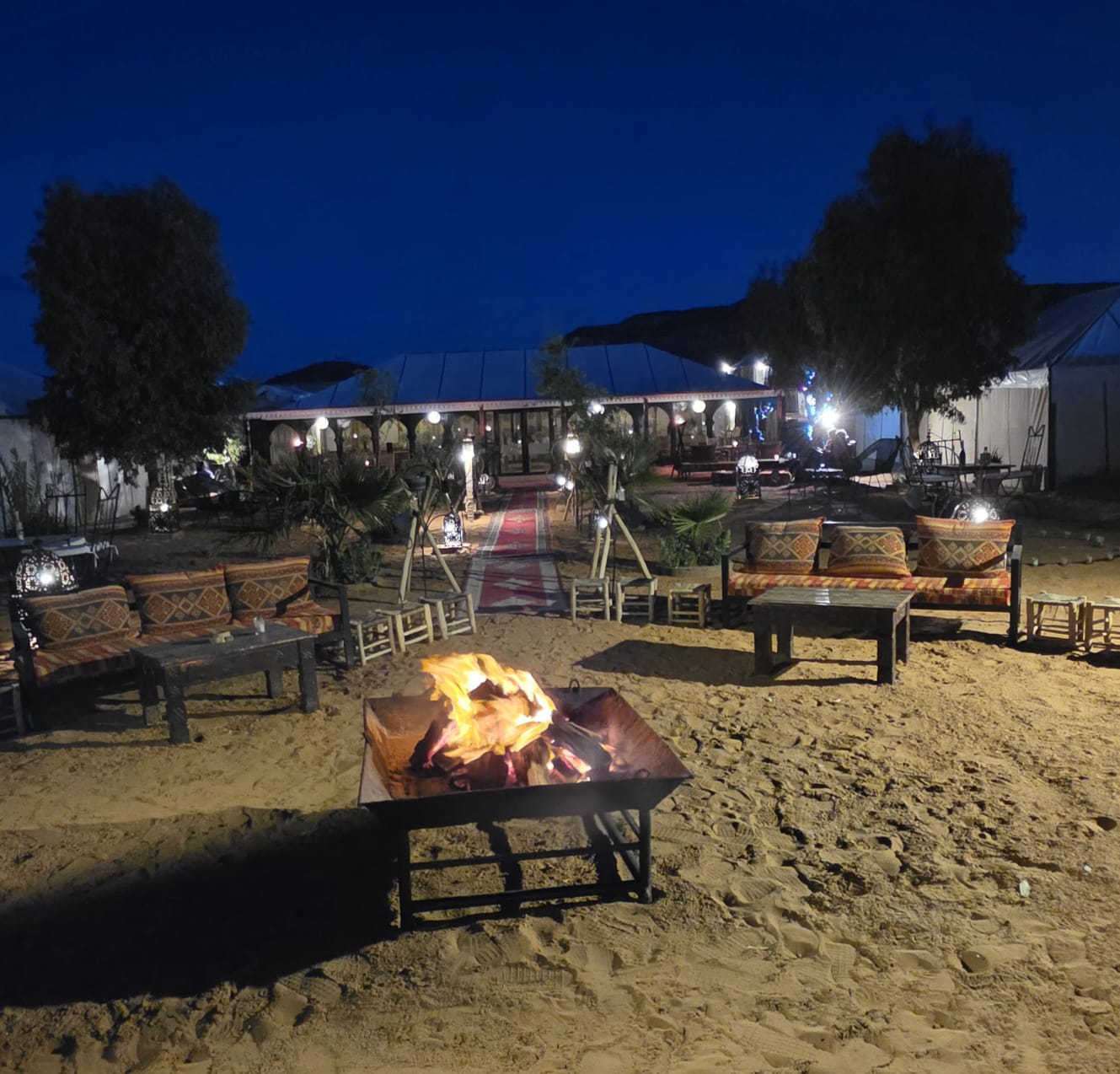
Five-star boutique riads in Marrakech start at $150 per night and reach $400 or more for palatial properties. Luxury desert camps in Merzouga cost $100 to $300 per night, including gourmet meals, private bathrooms, and guided camel treks at sunset. The value proposition of Moroccan luxury is remarkable. A stay at a beautifully restored five-star riad in Marrakech costs what a standard hotel room costs in Paris or London, yet the architecture, service, and cuisine far exceed what European city hotels deliver at the same price.
City-by-City Accommodation Price Comparison
|
City |
Budget/Night |
Mid-Range/Night |
Luxury/Night |
|
Marrakech |
$12-25 |
$50-100 |
$150-400+ |
|
Fes |
$10-20 |
$40-80 |
$120-300 |
|
Chefchaouen |
$10-18 |
$35-70 |
$100-200 |
|
Essaouira |
$10-20 |
$40-80 |
$120-250 |
|
Merzouga (Desert) |
$15-30 |
$50-90 |
$100-300 |
|
Casablanca / Rabat |
$15-30 |
$55-110 |
$150-350 |
Fes consistently delivers the best value among Morocco’s imperial cities, running 20 to 30% cheaper than Marrakech for comparable quality. Chefchaouen and Essaouira offer relaxed, affordable stays that attract travelers seeking fewer crowds.
 Food and Dining: Morocco Travel Cost Breakdown 2026
 Food and Dining: Morocco Travel Cost Breakdown 2026
Moroccan food is exceptional, and eating well costs very little. The honest rule is this: walk two streets away from any major tourist sight and your meal costs half the price with better food. Moroccan cuisine at its best is found in the tiny restaurants where locals eat, not in the places with laminated photo menus positioned directly on the main square.
Street Food and Local Eateries ($2-10 per Meal)
Street food prices remain among the lowest in North Africa. A bowl of harira soup costs 5 MAD (about $0.50). A sardine sandwich runs 8 MAD ($0.80). Fresh-squeezed orange juice, which Marrakech is famous for, costs just 4 MAD ($0.40). Kebabs run 10 to 15 MAD ($1 to $1.50). A full meal at a local restaurant, including a tagine or couscous with bread and mint tea, costs 30 to 50 MAD ($3 to $5). These local snack restaurants serve filling, authentic food and represent the single best value in all of Morocco.
Mid-Range Restaurant Dining ($10-30 per Meal)
Tourist-friendly restaurants charge $15 to $25 per person for a full meal. A classic tagine at a sit-down restaurant costs $10 to $20. Mint tea runs 5 to 10 MAD ($0.50 to $1). Many mid-range riads include breakfast, saving $5 to $8 per day immediately. A mid-range traveler budgeting $30 to $40 per day for food will eat very well, combining one or two local meals with an occasional restaurant dinner.
Fine Dining and Alcohol Costs ($30-60+ per Meal)
Upscale restaurants charge $30 to $60 or more per person. Rooftop dining experiences with views over the medina run $40 to $80. Alcohol is heavily taxed in Morocco and not universally available. A glass of wine or beer costs $8 to $15 at venues that serve it, and a bottle of wine runs $25 to $50. Travelers who prefer not to drink alcohol save significantly, as fresh juices, mint tea, coffee, and soft drinks cost $1 to $3. Cooking classes combining instruction with a full meal cost $20 to $50 and deliver outstanding value as both an activity and a dining experience.
Transportation: Morocco Travel Cost Breakdown 2026
Getting to Morocco: Flight Costs
From North America, round-trip flights to Morocco cost $500 to $1,200. Royal Air Maroc operates direct flights from New York, Washington DC, and Miami to Casablanca, with a new Casablanca to Los Angeles route launching in June 2026. Most US departures otherwise involve one connection through a European hub. Shoulder season flights from the US run $500 to $900, while peak summer pricing reaches $900 to $1,400.
From Europe, round-trip flights cost $100 to $400, with budget carriers including Ryanair, easyJet, Transavia, and Vueling serving Marrakech, Fes, Tangier, Casablanca, Agadir, and Essaouira. Flight times from major European cities run two to four hours. From the UK, flights start at £60 to £250 round-trip. Travelers from Canada should budget CAD $700 to $1,200 for round-trip flights.
An alternative entry point is the ferry from southern Spain. The Tarifa to Tangier fast ferry costs approximately EUR 38 one way and takes 35 minutes, offering a scenic and cost-effective option for travelers already in Spain.
To get the best fares, book two to three months in advance. The cheapest months to fly are January, March, and the shoulder seasons of April to May and September to November. December, Easter week, and peak summer see the highest pricing.
High-Speed Train: Al Boraq
The Al Boraq high-speed train connects Tangier to Casablanca via Rabat at 320 km/h, covering the route in just 2 hours and 10 minutes. Second-class fares run 150 to 220 MAD ($15 to $22), and first-class runs 200 to 300 MAD ($20 to $30). Early bookings through the ONCF website unlock promotional fares from 99 MAD ($10). This is the most comfortable and efficient way to travel the Tangier to Casablanca corridor.
Regular Trains (ONCF) and Long-Distance Buses
ONCF trains connect Morocco’s major cities at highly affordable prices. The Casablanca to Marrakech route costs approximately 80 to 100 MAD ($8 to $10). Fes to Meknes runs just 25 to 35 MAD ($2.50 to $3.50). First class is worth the small upgrade, typically costing 30% more than second class for notably more comfort on longer journeys.
CTM and Supratours buses serve destinations the train network does not reach, including Chefchaouen, Essaouira, and Zagora. Marrakech to Essaouira costs 80 to 100 MAD ($8 to $10). Marrakech to Fes costs 150 to 180 MAD ($15 to $18). Both companies operate modern, air-conditioned coaches and sell tickets online or at station counters.
Local Taxis and Car Rental
Petit taxis operate within cities and cost 10 to 50 MAD ($1 to $5) per ride. Always insist the driver uses the meter, or agree on a fare before entering the taxi. Grand taxis travel between cities, operating as shared vehicles for 2 to 10 MAD per person when full (typically six passengers), or bookable as private transfers at six times the shared rate.
Car rental costs $20 to $30 per day for an economy vehicle, with fuel running approximately 14 MAD per liter. Adding mandatory insurance brings the daily total to $40 to $60. A rental car is excellent for exploring the Atlas Mountains, the Draa Valley, and rural areas at your own pace. However, navigating the medinas of Marrakech or Fes in a private vehicle is not recommended.
Tours and Activities: Morocco Travel Cost Breakdown 2026
Free and Budget Activities (Under $10)
Some of Morocco’s greatest experiences cost nothing. Walking the ancient medinas of Fes and Marrakech is free. Beaches along the Atlantic coast are free. Hiking trails in the Atlas Mountains require no entry fee. Historical palaces and major sites such as Bahia Palace and the Medersa Bou Inania charge 50 to 70 MAD ($5 to $7). Public gardens cost 10 to 20 MAD. Free walking tours of the medinas operate on a tip basis, with $5 to $10 per person being the appropriate contribution.
Sahara Desert Tours: The Must-Do Morocco Experience
A Sahara desert tour is the centerpiece of most Morocco itineraries and represents exceptional value compared to similar experiences anywhere in the world. Shared overnight tours cost $80 to $120 per person for two days and $120 to $180 per person for three days, including 4×4 transport, camel trekking at sunset, traditional Berber dinner, and overnight accommodation in a desert camp with breakfast.
Private desert tours cost $150 to $250 per person for two days and $250 to $400 per person for three days, offering greater flexibility and custom routing through kasbahs, gorges, and valleys. Luxury desert camps charge $100 to $300 per night, with premium tents, gourmet meals, and private bathrooms.
Booking directly with a local operator saves 30 to 50% compared to booking through hotels or international booking platforms. To secure the best desert tour rates with an experienced Berber guide, visit Tilila Travel Sahara Desert Tours.

Guided City Tours and Day Trips
Guided walking tours of the medinas cost 100 to 200 MAD ($10 to $20). Day trips to the Atlas Mountains run 300 to 600 MAD ($30 to $60). Day trips to Essaouira cost 300 to 500 MAD ($30 to $50), while the Ouzoud Waterfalls trip runs 250 to 400 MAD ($25 to $40). Quad biking and buggy tours around the Agafay Desert cost 400 to 800 MAD ($40 to $80). Cooking classes with a local chef cost 200 to 500 MAD ($20 to $50) and include a full meal.
Hammam, Wellness, and Cultural Experiences
A traditional public hammam costs just 10 to 20 MAD ($1 to $2), making it one of the most authentic and affordable cultural experiences Morocco offers. Hotel and riad hammams charge 300 to 500 MAD ($30 to $50) for a full hammam and scrub treatment. Adding a massage brings the total to 400 to 800 MAD ($40 to $80). Moroccan craft workshops cost 150 to 300 MAD ($15 to $30). Traditional music performances run 100 to 300 MAD ($10 to $30).
City-by-City Morocco Travel Cost Breakdown 2026
Marrakech Daily Cost Breakdown
Marrakech is Morocco’s most visited and most expensive city. Budget travelers manage on $40 to $60 per day. Mid-range travelers spend $80 to $120 per day. Luxury travelers spend $200 to $400 or more per day. The famous Jemaa el-Fnaa square is free to explore, though the restaurants directly surrounding it charge tourist prices. Walking two streets into the medina cuts food costs in half.
Fes Daily Cost Breakdown
Fes offers the best value among Morocco’s imperial cities, running 20 to 30% cheaper than Marrakech across accommodation, food, and tours. Budget travelers manage $30 to $50 per day. Mid-range travelers spend $70 to $110 per day. Fes has Morocco’s finest medina, the world’s oldest functioning university at Al-Qarawiyyin, and the iconic tanneries, all accessible at minimal cost. The authenticity of Fes is unmatched, and its value makes it an essential stop on any Morocco itinerary.
Chefchaouen and Essaouira Cost Breakdown
Chefchaouen, the famous blue-painted mountain city in the Rif Mountains, is among Morocco’s most affordable destinations. Budget travelers spend $30 to $45 per day. Mid-range travelers spend $65 to $100 per day. Hiking in the surrounding mountains is free, and the city’s relaxed pace makes it a natural place to extend your stay. Essaouira on the Atlantic coast runs slightly higher at $35 to $50 per day for budget travel and $70 to $110 for mid-range. Fresh seafood at the port is affordable, and beaches are free.
Desert Regions: Merzouga and Zagora
The Sahara gateway towns of Merzouga and Zagora have seen minimal price increases compared to Morocco’s northern cities. Local guesthouses cost 150 to 300 MAD ($15 to $30) per night. Merzouga sits closer to the highest dunes of Erg Chebbi and offers more developed facilities. Zagora is closer to Marrakech and suits travelers with less time. Overall daily costs including a desert camp experience average $60 to $100 for mid-range travelers in these regions.
Casablanca and Rabat
As Morocco’s business capital, Casablanca runs slightly higher on food and accommodation than the tourist cities. However, the famous Hassan II Mosque charges just 130 MAD ($13) for entry and ranks among the world’s great architectural achievements. Rabat, the capital, is more relaxed, has excellent museums, and delivers strong value in its restaurant scene due to lower tourist volumes. Mid-range travelers budget similarly to Marrakech in both cities.
Complete Sample Morocco Trip Budgets for 2026
Sample Budget 1: Backpacker 7-Day Morocco Trip ($350-$550 Total)
This itinerary covers Marrakech, Essaouira, and Fes on a daily budget of $50 to $80 per person. Accommodation costs $10 to $15 per night using hostels and budget guesthouses. Food runs $15 to $20 per day combining street food with one restaurant meal. Local transport via CTM buses and petit taxis costs $10 to $15 per day. Activities including free medina walking, one paid museum visit, and a free tip-based walking tour add $15 to $30 per day. Total for seven days runs $350 to $550, excluding international flights.
Sample Budget 2: Mid-Range Couple 10-Day Morocco Trip ($2,400-$3,000 for Two)
This itinerary covers Marrakech, the Sahara Desert, Fes, and Chefchaouen. Each person spends $120 to $150 per day. Accommodation in traditional riads runs $50 to $80 per night for a shared room. Food combining local and tourist restaurants costs $35 to $50 per day per person. A shared three-day desert tour adds approximately $150 per person. First-class trains connect cities efficiently. Total for the couple over ten days runs $2,400 to $3,000, excluding international flights.
To build a custom mid-range itinerary with transparent pricing, request a quote from Tilila Travel Custom Morocco Tours.
Sample Budget 3: Luxury 7-Day Private Morocco Tour ($4,000-$6,000 per Couple)
This private tour covers Marrakech, the Sahara, and Fes with a dedicated private driver throughout. Accommodation in five-star riads and a luxury desert camp costs $200 to $400 per night. Fine dining and culinary experiences add $80 to $120 per day per person. Private guides in each city run $100 to $150 per day. Total for the couple over seven days runs $4,000 to $6,000, including a private driver, luxury accommodation, all guided tours, and most meals.
Money-Saving Strategies: Morocco Travel Cost Breakdown 2026
Best Time to Visit for Budget Travelers
January and February are Morocco’s cheapest months, offering 20 to 40% lower accommodation and tour prices with fewer tourists. The Atlantic coast remains mild, though desert nights are cold. March through May and September through November deliver the best combination of weather and competitive pricing, making these shoulder seasons the sweet spot for most international visitors.
December and January holidays, Easter week, and the peak October tourist season all carry premiums of 20 to 40% on accommodation. Ramadan in 2026 falls in late February and early March. Travel during Ramadan is entirely possible, though many restaurants close during daylight hours. The evenings during Ramadan, however, come alive with iftar celebrations that offer one of Morocco’s most authentic cultural experiences.
15 Expert Money-Saving Tips for Morocco 2026
- Book desert tours directly with licensed local operators rather than through hotels or international booking platforms, saving 30 to 50%.
- Eat where locals eat. Walk at least two streets away from major tourist squares for meals that cost half the price and taste twice as good.
- Avoid any restaurant with a hustler standing outside or a laminated photo menu designed to attract tourists.
- Stay multiple nights at the same riad and politely negotiate a 10 to 20% discount for extended stays.
- Use ONCF trains and CTM buses for intercity travel instead of private taxis.
- Travel during shoulder seasons: March to May and September to November offer excellent weather and lower prices.
- Book accommodation directly with riads rather than through booking platforms to save 15 to 25%.
- Take advantage of included riad breakfasts rather than eating out, saving $5 to $8 per person per day.
- Use Al Barid Bank ATMs at post offices for the best exchange rates and lowest transaction fees.
- Set a separate shopping budget before entering the souks and stick to it. Carpets, leather goods, and spices are tempting.
- Bargain politely in markets. Counter at 30 to 50% of the initial asking price and be prepared to walk away.
- Share grand taxis with other passengers rather than booking the whole vehicle.
- Take free walking tours of the medinas and tip $5 to $10 per person.
- Withdraw the maximum amount from ATMs each time to minimize the 20 to 40 MAD per-transaction fee.
- Purchase a local SIM card from Maroc Telecom, Orange, or Inwi upon arrival. Starter packs cost 20 to 30 MAD, with data add-ons at approximately 10 MAD per gigabyte.
Hidden Costs and Extras: Morocco Travel Cost Breakdown 2026
Tipping Culture in Morocco
Tipping forms an expected and important part of the economy in Morocco. At restaurants, 10 to 15% is standard when a service charge is not already included. Hotel porters and hammam attendants expect 10 to 20 MAD per service. Tour guides and private drivers receive 50 to 100 MAD per day as a tip. Bathroom attendants in public facilities charge 2 to 5 MAD. Budgeting $5 to $10 per day for tips covers all gratuities comfortably.
Shopping in Souks: Setting Your Market Budget
The souks of Marrakech and Fes rank among the most beautiful and overwhelming markets on earth. They are also specifically designed to extract money from enthusiastic tourists. Setting a clear shopping budget before entering the medina is the single most effective strategy for controlling this variable. Common purchases include spices at 50 to 200 MAD, pottery at 50 to 300 MAD, leather goods at 200 to 800 MAD, and hand-woven Berber carpets ranging from 500 MAD to 5,000 MAD or more. Always counter initial asking prices at 30 to 50% and walk away if the negotiation stalls.
Travel Insurance and Visas
Travel insurance for a two-week Morocco trip costs approximately $40 to $120 depending on coverage and provider. World Nomads, SafetyWing, and Allianz are popular choices among Morocco travelers. Coverage should include medical emergencies, medical evacuation, and trip cancellation. Adventure activities such as desert tours and mountain trekking require specific activity coverage. Morocco offers 90 days of visa-free entry to most Western passport holders. No visa cost is therefore required for most international visitors.
Recommended vaccinations include Hepatitis A and typhoid, costing $100 to $200 depending on your home country. Tap water throughout Morocco is not recommended for drinking. Bottled water costs 5 to 10 MAD per liter ($0.50 to $1.00). Laundry services through riads or local laundries cost 30 to 50 MAD per load.
Morocco vs. Other Destinations: How the Costs Compare
Morocco vs. Western Europe
Across most major travel expenses, Morocco is significantly more affordable than Western Europe. In fact, travelers can expect costs to be around 40–60% lower overall.. A hotel room in Marrakech that costs $60 to $80 per night would cost $150 to $200 or more in Paris, Barcelona, or Rome at equivalent quality. Restaurant meals in Morocco cost 50 to 70% less than comparable meals in European capital cities. Activities and guided tours run significantly lower. For European travelers in particular, Morocco delivers a luxury-caliber experience at mid-range European prices.
Morocco vs. Other Popular Budget Destinations
Morocco’s pricing compares favorably with Southeast Asia and Eastern Europe, two regions long considered the benchmark for affordable international travel. Morocco is more affordable than Egypt for most spending categories and slightly pricier than some parts of South America. Compared to Japan and South Korea, Morocco is dramatically cheaper. The value proposition is further strengthened by its geographic proximity to Europe and the growing number of direct connections from North America.
Why Book Your Morocco Trip with Tilila Travel
Local Expertise and Transparent Pricing
Tilila Travel is a Morocco-based, Berber-owned family operator with firsthand knowledge of every destination, route, and price in this guide. Unlike international booking platforms that add 20 to 30% in intermediary fees, Tilila Travel works directly with accommodation owners, desert camp operators, and local guides. Every quote arrives as a transparent, line-by-line breakdown with no hidden fees. To see what this means in practice, browse the Morocco Tours and Packages at Tilila Travel.
Guides at Tilila Travel know their destinations not from scripts but from decades of personal experience. A private guide showing you the Fes tanneries grew up in the medina. A desert tour guide from Tilila Travel is a Berber from Merzouga who has crossed those dunes hundreds of times. This depth of local knowledge makes every itinerary richer and every dirham spent more worthwhile.
Proven Value and Outstanding Reviews
Tilila Travel consistently earns five-star reviews from travelers citing exceptional value for money. Families have completed 16-day tours covering 4,500 kilometers within their stated budget, thanks to direct operator relationships that eliminate unnecessary costs. Couples report spending 30 to 50% less than they expected when working with Tilila Travel versus booking each element independently through international platforms.
Whether you are planning your first trip to Morocco or returning for a deeper exploration, the team at Tilila Travel will build a personalized itinerary that matches your budget and delivers more than you expected. All-inclusive private tour packages cover transport, accommodation, breakfast, selected dinners, and professional guiding from arrival to departure.
Get Your Custom Morocco Travel Quote for 2026
Contact Tilila Travel today with your travel dates, group size, budget range, and preferred travel style. The team will respond with a detailed, honest, line-by-line quote tailored to your specific Morocco travel cost breakdown for 2026. There is no obligation and no pressure. Just transparent pricing from a local team that genuinely wants you to experience Morocco at its best. Visit tililatravel.com/contact to get started.
Frequently Asked Questions: Morocco Travel Cost Breakdown 2026
How much does a 1-week trip to Morocco cost in 2026?
A one-week trip to Morocco typically costs $350 to $550 for budget travelers, $700 to $1,200 for mid-range travelers, and $1,800 to $3,000 or more for luxury travelers, all excluding international flights. The average traveler spends approximately $89 per day, which translates to roughly $621 for a seven-day trip including accommodation, food, local transport, and sightseeing.
Is $1,000 enough for a Morocco trip in 2026?
Yes. $1,000 USD equals approximately 10,800 to 11,200 MAD and covers a full week of mid-range travel comfortably. Budget travelers can stretch $1,000 across 10 to 14 days. $1,000 covers accommodation in traditional riads, excellent food, guided tours, a Sahara desert experience, and local transport with money to spare.
What is the cheapest time to visit Morocco in 2026?
January and February are Morocco’s cheapest months, with accommodation and tour prices 20 to 40% lower than peak season. Shoulder seasons from March to May and September to November offer the best combination of favorable weather and competitive pricing. December, Easter, and the October peak season carry the highest costs.
How much does a Sahara Desert tour cost in 2026?
A shared overnight Sahara Desert tour costs $120 to $180 per person. A private desert tour costs $200 to $350 per person. Luxury desert camp experiences start at $400 to $700. Booking directly with a local operator such as Tilila Travel saves 30 to 50% compared to booking through a hotel or international platform.
Is Morocco cheaper than Europe in 2026?
Morocco is 40 to 60% cheaper than Western Europe. Accommodation, food, transport, and activities all cost significantly less than comparable European destinations. A luxury riad in Marrakech costs what a standard hotel room costs in Paris or London, making Morocco exceptional value for European travelers.
Will the 2030 World Cup affect Morocco prices in 2026?
Morocco co-hosts the 2030 FIFA World Cup with Spain and Portugal, and accommodation prices in major cities have already risen 15 to 20% since 2024. Hotel prices will continue rising 10 to 15% annually through 2030. Visiting in 2026 offers the last genuinely affordable window before World Cup pricing fully transforms the market.
What are the hidden costs of traveling in Morocco?
The main hidden costs include tips ($5 to $10 per day), souk shopping (highly variable), ATM transaction fees of 20 to 40 MAD per withdrawal, travel insurance ($40 to $120 for two weeks), a local SIM card ($2 to $3), bottled water ($0.50 to $1 per liter), and any tour upgrades or optional experiences. Building a 10 to 15% buffer into your total budget covers these comfortably.
How much cash should I bring to Morocco in 2026?
Withdraw Moroccan Dirhams from ATMs upon arrival rather than exchanging cash at home. Budget travelers need approximately 300 to 500 MAD ($30 to $50) per day in cash. Mid-range travelers need 500 to 800 MAD ($50 to $80) per day. Cards work at larger hotels and restaurants, but cash is essential for souks, taxis, street food, tips, and smaller shops throughout the medina.
Is Morocco safe for solo travelers in 2026?
Morocco is safe for solo travelers, both male and female, when normal travel precautions apply. Licensed guides carry official photo identification. Petit taxis should always use meters or agree on fares before the journey begins. Solo travelers face single room supplements of 20 to 40% compared to couples sharing a room. Joining shared group tours is a practical and social way to reduce this cost while meeting other travelers.
How does Morocco compare to Southeast Asia for budget travel?
Morocco and Southeast Asia occupy a similar price range for budget and mid-range travel. Morocco is slightly more expensive than Vietnam or Cambodia but comparable to Thailand. The key advantage of Morocco for European and North American travelers is geographic proximity and shorter flight times, which significantly reduces the largest single cost in any trip budget.
Final Thoughts: Your Morocco Travel Cost Breakdown 2026
Morocco in 2026 delivers one of the strongest value propositions in global travel. The country offers world-class riads at mid-range prices, Sahara Desert experiences that rival any adventure destination on earth, ancient medinas that redefine what a city can feel like, and food that consistently surprises travelers who did not expect it to be this good.
Furthermore, the timing matters. Hotel prices are rising annually as Morocco prepares for the 2030 World Cup. The travelers who visit in 2026 will pay less for the same experience than those who wait until 2027, 2028, or 2029. The infrastructure is improving, the tourism infrastructure is mature, and the value is still extraordinary across every budget level from $30 per day to $400 per day.
To plan your Morocco trip with a local team that knows every cost, every shortcut, and every experience worth having, contact Tilila Travel today. Share your travel dates, group size, and budget. The team will build a transparent, personalized Morocco travel cost breakdown for 2026 that shows exactly what you will spend and exactly what you will receive in return. Your Morocco adventure awaits.