
Morocco is one of the most exciting travel destinations in the world. Ancient medinas, golden Sahara dunes, dramatic Atlas Mountain passes, and buzzing coastal cities all packed tightly into one country. However, figuring out how to get around in Morocco can feel genuinely overwhelming, especially if you are visiting for the first time.
Should you take a train or book a bus? Is renting a car a smart idea? Can you actually trust taxis, and how do you avoid getting overcharged at every stop?
Throughout this complete Morocco transport guide, we answer every one of those questions. Moreover, we go further than most guides we compare every single transportation option available, so you can match the right choice to your travel style, your budget, and your itinerary.
Whether you are a budget backpacker, a comfort-first couple, or a family on holiday, these Morocco travel tips will help you navigate this incredible country with total confidence.
Every traveler wants something a little different — that's exactly how we plan.
Tell us how much time you have, where you're starting from, and what draws you to Chefchaouen — the mountains, the photography, the quiet, the handicrafts, or simply a break from the bigger cities. We'll build a private itinerary around that, from your arrival to your final transfer.
Plan Your Morocco Tour NowThe Smartest Way to Travel Morocco
The most experienced Morocco travelers do not stick to just one mode of transport. Instead, they mix and match options depending on the leg of the journey. For example, take the ONCF train between Casablanca and Marrakech. Then switch to a grand taxi from Marrakech toward Zagora. After that, book a private driver for the Sahara desert circuit. Finally, use petit taxis inside each city for short, local trips.
As a result, this combination saves you money, cuts travel time significantly, and removes a huge amount of stress from your trip. Furthermore, it gives you the flexibility to change plans if your schedule shifts.
|
Pro Tip from Tilila Travel: Over the years, we have helped hundreds of travelers plan their Morocco transport strategy. The biggest mistake we consistently see? Travelers either over-plan by renting a car they do not actually need, or they under-plan by relying on local taxis for long-distance routes. In both cases, the mix & match approach solves the problem. Learn more at tililatravel.com. |
Transportation Options in Morocco
Morocco’s transport network is more developed than most travelers expect. Nevertheless, understanding how the different options connect is not always straightforward. Therefore, here is a quick overview of every transportation option available, followed by a deep dive into each one:
|
Transport Type |
Best For |
Cost |
Comfort |
Coverage |
|
ONCF Train |
City-to-city travel |
Low–Medium |
High |
Major cities only |
|
Al Boraq (TGV) |
Casablanca–Tangier |
Medium |
Very High |
Limited route |
|
CTM / Supratours Bus |
Budget intercity travel |
Low |
Medium |
Nationwide |
|
Grand Taxi |
Flexible short routes |
Low–Medium |
Low–Medium |
Nationwide |
|
Petit Taxi |
Within cities |
Very Low |
Medium |
All cities |
|
Tram |
Casablanca & Rabat only |
Very Low |
High |
2 cities |
|
Careem (App) |
City rides |
Low–Medium |
High |
Major cities |
|
Car Rental |
Rural & adventure routes |
Medium–High |
High |
Nationwide |
|
Private Driver |
Comfort & groups |
High |
Very High |
Nationwide |
As you can see, each transportation option serves a very different purpose. Consequently, the real key to getting around Morocco efficiently is matching the right tool to the right job. Let’s break them all down in detail.
How to Travel Between Cities in Morocco?
Intercity travel is where most Morocco travelers spend the majority of their planning energy and for good reason. The distances are significant, the route options vary widely, and the choices differ enormously in terms of comfort, cost, and reliability. Here is everything you need to know.
By Train
Morocco’s national rail network, ONCF (Office National des Chemins de Fer), is widely regarded as one of the best in Africa. Consequently, if your destination sits on the rail map, the train should almost always be your first choice for intercity travel.
ONCF — The National Railway Network
ONCF operates comfortable, punctual, and genuinely affordable trains connecting Morocco’s major cities. Routes currently run between Casablanca, Rabat, Fes, Meknes, Tangier, and Marrakech. Furthermore, trains run frequently throughout the day, and you can book tickets online in advance through the ONCF website or mobile app.
- 2nd class is budget-friendly and perfectly comfortable for the vast majority of travelers
- 1st class adds noticeably more legroom, better seats, and a significantly quieter carriage
- Trains are generally on time, fully air-conditioned, and offer onboard refreshments
- Booking at least 2–3 days ahead (particularly on weekends and holidays) guarantees your preferred seat
Al Boraq — Africa’s High-Speed Train
Africa’s first high-speed rail service, Al Boraq, launched in 2018. It connects Casablanca to Tangier in just over two hours a journey that previously took nearly five hours. Therefore, if you are traveling this specific corridor, Al Boraq is absolutely worth the slightly higher fare.
- Top speed: 320 km/h, making it one of Africa’s fastest trains
- Route: Casablanca → Kenitra → Rabat → Salé → Tangier
- Total duration: Approximately 2 hours 10 minutes from Casablanca to Tangier
- Fares are slightly higher than standard ONCF, but very competitive when you factor in the time saved
|
Route |
Train Type |
Duration |
Approx. Fare (2nd Class) |
|
Casablanca → Marrakech |
ONCF Express |
~3 hours |
100–130 MAD |
|
Casablanca → Fes |
ONCF Express |
~4 hours |
110–145 MAD |
|
Casablanca → Tangier |
Al Boraq |
~2h 10min |
150–200 MAD |
|
Rabat → Tangier |
ONCF |
~3.5 hours |
90–120 MAD |
|
Fes → Meknes |
ONCF |
~45 minutes |
30–45 MAD |
|
Important: Trains do NOT reach Chefchaouen, Merzouga, Zagora, Essaouira, or Ouarzazate. For all of these destinations, you will need to use buses, grand taxis, or a private driver instead. |
By Bus (Best for Budget Travelers)
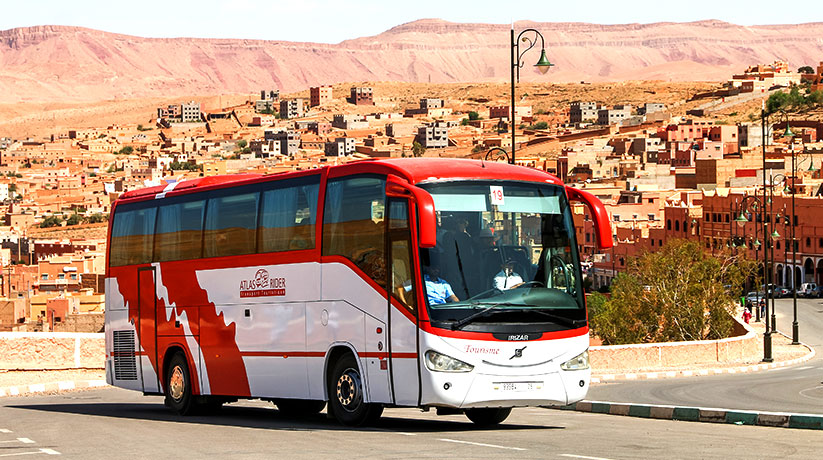
If the train does not serve your destination or if you simply want the most affordable way to travel between cities Morocco’s long-distance bus network is the right solution. Two major operators dominate this space: CTM and Supratours.
CTM (Compagnie de Transport Marocain)
CTM is Morocco’s most established private bus operator. Notably, it covers routes nationwide, including many destinations that the train cannot reach. In addition, CTM buses are comfortable, reliably scheduled, and bookable online.
- Routes: Nationwide — including Essaouira, Agadir, Chefchaouen, and Ouarzazate
- Comfort: Air conditioning, assigned seats, and decent legroom throughout
- Punctuality: Generally reliable, although mountain routes occasionally experience delays
- Online booking: Available at ctm.ma — always book ahead for popular weekend routes
Supratours
Supratours is owned by ONCF and was specifically created to extend the rail network’s reach. As a result, it is particularly useful for travelers who want a seamless train-to-bus connection without switching operators.
- Key routes: Marrakech → Agadir, Marrakech → Essaouira, and Fes → Chefchaouen, among others
- Ticket booking: Available at ONCF train stations or online at supratours.ma
- Comfort level: Comparable to CTM — reliable, air-conditioned, and well-managed
|
Feature |
CTM |
Supratours |
|
Coverage |
Nationwide |
Primarily ONCF-linked routes |
|
Online Booking |
Yes (ctm.ma) |
Yes (supratours.ma) |
|
Luggage Storage |
Under-bus hold |
Under-bus hold |
|
Comfort Level |
Good |
Good |
|
Best For |
General intercity travel |
Rail-to-destination connections |
|
Avoid: Local buses from standard bus stations are extremely cheap but consistently overcrowded and slow. Unless you are on an absolute shoestring budget, CTM or Supratours is always the better choice. |
By Grand Taxi (Best for Flexible Travel)
Grand taxis are one of Morocco’s most unique and most misunderstood transportation options. Essentially, these are large shared taxis (typically older Mercedes sedans) that run fixed routes between towns. Unlike buses, however, they depart only when full, which usually means six passengers. There is no fixed schedule, which makes them wonderfully flexible.
- No advance booking required — simply show up at the grand taxi stand near the bus station
- Generally faster than buses on short routes because they make no intermediate stops
- You can pay for multiple seats (called chartering) to depart immediately without waiting to fill
- Fares are fixed per person and should be confirmed with the driver before you get in
- Particularly useful for reaching smaller towns that CTM and ONCF do not serve
Overall, grand taxis are a genuinely authentic and surprisingly efficient way to travel in Morocco. Moreover, the experience puts you alongside local Moroccans making the same journey, which adds real character to your trip.
|
Practical tip: Always ask “prix par personne?” (price per person?) before agreeing to any fare. This prevents drivers from charging you for a full charter (prix pour tout le monde) when you only need a single seat. |
Getting Around Cities in Morocco
Once you arrive in a Moroccan city, your options for local transport multiply quickly. Fortunately, navigating Moroccan cities is far less complicated than it might first appear. Here is how to move around efficiently without getting lost or overcharged.
Petit Taxis — The Go-To Option for City Rides
Petit taxis are small, color-coded city taxis designed specifically for short, within-city trips. Cheap, convenient, and ubiquitous, they are the backbone of urban transport across Morocco. Importantly, each city uses a different color: red in Marrakech, blue in Rabat, and beige in Casablanca.
- Always request the meter: Say “compteur, s’il vous plaît” when you get in and insist if the driver hesitates
- Short journeys within most cities typically cost between 10 and 30 MAD
- Petit taxis carry a maximum of 3 passengers, so they will not fit large groups
- After approximately 8pm or 9pm, a night surcharge of around 50% applies automatically
- Never get in without either confirming the meter is running or agreeing on a fixed fare upfront
In practice, petit taxis are safe and widely used by both locals and tourists. Nevertheless, the most common frustration travelers encounter is a driver who insists on a flat fare rather than using the meter. In that case, simply find a different taxi — there is almost always another one nearby.
Trams (Casablanca and Rabat)
Two Moroccan cities currently operate modern tram systems: Casablanca and Rabat. Both networks are clean, punctual, affordable, and genuinely pleasant to use. If you plan to spend more than one day in either city, the tram will quickly become your default transport option.
- Casablanca Tram: Lines T1 and T2 cover major districts and connect central neighborhoods to the suburbs
- Rabat–Salé Tram: Links Rabat city center with Salé, the neighboring city just across the Bouregreg River
- Standard fares run approximately 6–8 MAD per ride, making this the cheapest city transport option
- Purchase and validate your ticket at stops before boarding to avoid on-board penalties
- Trams are fully air-conditioned, modern, and run on predictable, published timetables
Ride-Hailing Apps — Careem and InDrive
Careem, which Uber acquired in 2019, currently operates across Morocco’s major cities, including Casablanca, Rabat, and Marrakech. Functionally, it works identically to Uber you request a ride through the app, the price appears upfront, and you pay by card or cash at the end.
- No fare negotiation whatsoever — the price you see in the app is the price you pay
- Driver ratings, GPS live tracking, and trip sharing features provide added peace of mind
- Available around the clock, and considerably more reliable than street taxis late at night
- Slightly pricier than a metered petit taxi, but the transparency and convenience usually justify the difference
- Download Careem and add your payment method before arriving in Morocco, not after
|
Also worth checking: InDrive operates in several Moroccan cities and often offers competitive rates. Always compare both apps for the best price in your specific location. |
Renting a Car in Morocco — Pros, Cons, and What to Expect
Renting a car in Morocco opens up the country in ways that buses and taxis simply cannot. You can drive the Dades Gorge at your own pace, stop at roadside kasbahs, explore isolated Atlas Mountain villages, and reach stretches of coastline that no public transport touches. That said, car rental in Morocco comes with some real challenges that are worth understanding before you commit.
Pros of Renting a Car |
Cons of Renting a Car |
|
Total freedom to explore rural and remote areas |
City driving is stressful and chaotic by most international standards |
|
Access to places no bus or taxi can reach |
Medina parking is extremely difficult or impossible |
|
Ideal for families carrying significant luggage |
Road signage outside major cities can be confusing |
|
Completely flexible schedule — go whenever you want |
Insurance and liability complexities catch many travelers off guard |
|
Mountain and desert routes are genuinely spectacular |
Fuel stations are rare and widely spaced in remote regions |
|
Driving Difficulty Warning: City driving in Casablanca and Marrakech in particular is chaotic by most international standards. Motorcycles weave constantly, lane discipline is largely ignored, and medina streets are impossibly narrow. Therefore, if you do rent a car, plan to use it primarily for intercity and rural routes rather than for urban navigation. |
If you decide that renting a car is the right choice for your trip, follow these key tips to avoid the most common problems:
- Book through established international brands (Avis, Europcar, Hertz) or well-reviewed local agencies
- Always take the full insurance package — do not skip it to save money
- Before driving away, photograph every scratch, dent, and scuff on the vehicle
- An international driving permit is required alongside your national driving license
- Download offline Google Maps for Morocco before departure as a reliable backup
- Avoid mountain and desert roads after dark, especially during winter months
Private Drivers & Tours in Morocco — Best for Comfort and Convenience
If you want to experience Morocco without any of the transport headaches no fare negotiations, no waiting for buses that may or may not depart on time, no deciphering train schedules in Arabic — then booking a private driver is by far the smartest investment you can make.
A professional private driver takes you precisely where you want to go, entirely on your schedule, in a comfortable air-conditioned vehicle. Importantly, experienced drivers also handle all logistics, typically speak English or French fluently, and effectively double as local guides who know exactly which stops are worth making along the way.
Why Tilila Travel Is the Right Choice for Private Tours in Morocco
At Tilila Travel, we specialize in private Morocco tours built entirely around your travel style and timeline. Rather than offering fixed, mass-market itineraries, we create custom experiences for every traveler we work with. Our local knowledge, professional drivers, and flexible approach set us apart from generic tour operators.
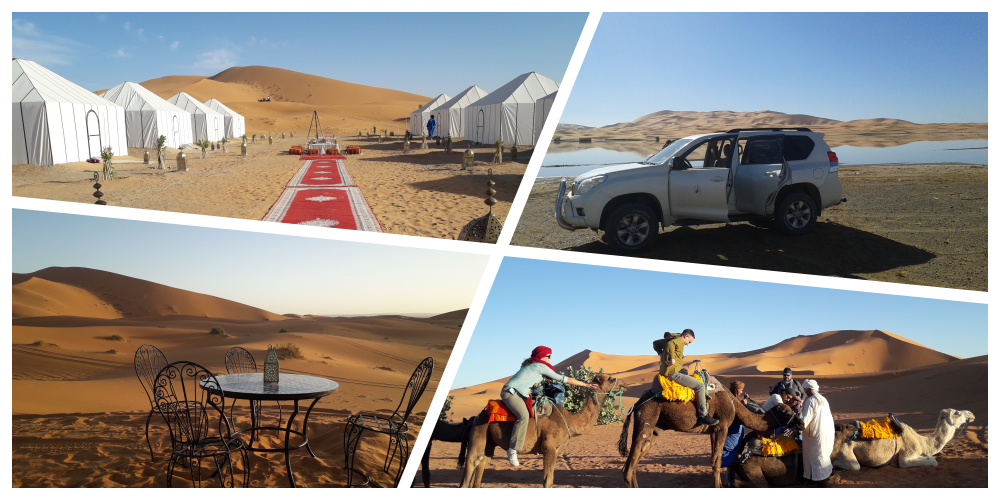
- Sahara Desert Tours: Private transfers from Marrakech or Fes to Merzouga, with camel trekking and luxury overnight desert camps. Explore our Sahara tours
- Imperial Cities Circuit: Customized tours covering Marrakech, Fes, Meknes, and Casablanca at your pace. See our imperial cities tours
- Atlas Mountain Day Trips: Guided excursions into the High Atlas with deep local Berber knowledge and cultural insight. View Atlas day trips
- Full Morocco Road Trips: 7, 10, or 14-day private tours with all transport, accommodation, and guidance included. Browse Morocco itineraries
|
Tilila Travel Promise: Every tour includes a professional local driver-guide, a modern comfortable vehicle, a flexible itinerary that adapts to your preferences, and 24/7 support throughout your trip. You focus entirely on the experience — we handle every detail. Visit tililatravel.com/contact to request your free custom quote. |
In particular, private tours are worth every extra dirham in the following situations:
- First-time visitors to Morocco who want guidance and reassurance throughout their trip
- Families or groups who prioritize comfort and convenience over cost savings
- Travelers wanting to reach the Sahara, Chefchaouen, or Essaouira without juggling multiple transport changes
- Couples celebrating a honeymoon, anniversary, or other special occasion
- Anyone with a tight schedule who needs to maximize every single day
Best Transport Option by Travel Style
Not every traveler has the same priorities. Consequently, the best Morocco transport option varies significantly depending on what kind of trip you are taking. Below is a practical guide to matching your travel style with the right combination of transport:
|
Your Travel Style |
Recommended Transport |
Why It Works |
|
Budget Traveler |
CTM / Supratours Bus + ONCF Train |
Lowest cost, wide national coverage, and comfortable enough for long journeys |
|
Comfort Traveler |
Private Driver + Petit Taxi in Cities |
Zero hassle, seamless transitions, and well worth the premium for a stress-free trip |
|
Adventure Traveler |
Rental Car + Grand Taxi for Transitions |
Complete freedom to explore remote areas and off-the-beaten-track routes |
|
Short City Break |
Petit Taxi + Careem + Tram |
Fast, cheap, and requires virtually no advance planning |
|
Family with Children |
Private Driver or Rental Car |
Flexible schedule, generous luggage space, and consistent comfort |
|
Solo First-Timer |
Train + CTM Bus + Private Sahara Tour |
Structured, safe, and easy to navigate without prior Morocco experience |
Essential Tips for Getting Around Morocco
Beyond choosing the right transport mode, a few practical tips will save you significant time, money, and frustration throughout your trip. Below, we have divided these into three categories: booking, safety, and scam avoidance.
 Booking Tips
 Booking Tips
- Book ONCF train tickets through the ONCF website or mobile app at least 2–3 days in advance, particularly during peak season (March–May and October–November) and around public holidays
- CTM and Supratours tickets sell out on popular routes — therefore, always book at least 24–48 hours ahead to secure your seat
- For private drivers and guided tours, book a minimum of 1–2 weeks in advance through a trusted operator. Contact Tilila Travel here to check availability and get a custom quote.
- Download offline Google Maps for Morocco before you leave home — it works reliably even in remote mountain and desert areas
- Carry small change in 10–20 MAD notes at all times, as petit taxi drivers and tram machines rarely have change for large bills
Safety Tips
- Petit taxis are widely safe — the primary risk is overpaying rather than any physical danger
- Grand taxis carry local Moroccan passengers and are equally safe, provided you confirm the fare per person before departure
- Late at night, use Careem or InDrive rather than hailing street taxis for greater transparency and added security
- If you are driving a rental car, avoid all mountain and desert roads after dark, especially during the winter months
- Police checkpoints are common throughout Morocco, so carry photocopies of your passport and driving license in your bag at all times
How to Avoid Common Transport Scams
- The most frequent transport scam: a taxi driver claims his meter is “broken.” The solution is straightforward — step out and find a different taxi
- Near popular transport hubs, unofficial “guides” may offer to escort you somewhere. Be aware that they earn commission from certain riads or shops
- At major train stations, porters may grab your luggage without being asked and then expect payment. Politely decline before they pick up your bags
- Grand taxi overcharging is preventable — always ask “prix par personne?” before agreeing to any quoted price
- Unofficial taxis outside airports routinely charge three to four times the standard rate. Instead, use official metered taxis or pre-book a transfer through your accommodation or a tour operator
Morocco Transport Plan — 10-Day Itinerary
Most Morocco travel guides simply list your transport options. This one goes further. Below is a realistic, day-by-day transport plan that shows you exactly which mode of travel to use at each stage of a 10-day Morocco itinerary. This is the specific structure that many of our Tilila Travel clients follow successfully.
|
Day |
Route |
Transport Mode |
Duration |
Estimated Cost |
|
Day 1 |
Arrive in Casablanca |
Airport taxi or Careem app |
30–45 min |
80–120 MAD |
|
Day 2 |
Casablanca → Rabat |
ONCF Train |
~1 hour |
45–60 MAD |
|
Day 3 |
Rabat → Chefchaouen |
CTM Bus |
~4.5 hours |
90–110 MAD |
|
Day 4 |
Explore Chefchaouen |
Walking + Petit Taxi |
Local only |
5–20 MAD per ride |
|
Day 5 |
Chefchaouen → Fes |
CTM Bus or Grand Taxi |
~3.5 hours |
70–100 MAD |
|
Days 6–7 |
Explore Fes medina |
Walking + Petit Taxi |
Local only |
10–25 MAD per ride |
|
Day 7 |
Fes → Merzouga (Sahara) |
Private Driver – Tilila Travel |
~8h with stops |
From 1,200 MAD |
|
Day 8 |
Merzouga → Dades Gorge |
Private Driver – Tilila Travel |
~4 hours |
Included in tour |
|
Day 9 |
Dades Gorge → Marrakech |
Private Driver – Tilila Travel |
~4.5 hours |
Included in tour |
|
Day 10 |
Marrakech → Casablanca Airport |
ONCF Train |
~3 hours |
100–130 MAD |
As this plan demonstrates, using every transport option in the right place gives you the best possible combination of cost, comfort, and convenience. The ONCF train handles the smooth city-to-city legs efficiently. CTM buses take you to Chefchaouen where the train cannot go. A Tilila Travel private driver manages the entire Sahara circuit the most logistically complex part of any Morocco trip. Meanwhile, petit taxis handle all local movement within each city.
Want a custom Morocco transport plan designed around your specific dates, interests, and budget? Contact Tilila Travel and our team will build your ideal itinerary from scratch.
Frequently Asked Questions – Getting Around in Morocco
Below are answers to the questions travelers ask most frequently about Morocco transportation. Additionally, many of these appear as “People Also Ask” results on Google, so this section is structured to help you find quick, authoritative answers.
Is Morocco easy to travel around?
Yes, Morocco is considerably easier to navigate than most first-time visitors expect. The ONCF train system is reliable for major cities, CTM buses cover routes nationwide, and apps like Careem make city transport fully transparent. The main learning curve is understanding which transport mode suits which specific route and that is exactly what this guide addresses.
Is it safe to travel in Morocco?
Morocco is generally a very safe destination for international tourists. In reality, the most common risks are minor scams such as overcharging or pushy unofficial guides, rather than any physical danger. To stay safe and avoid problems, stick to official taxis, always insist on metered fares, and use reputable operators for tours and transfers. Morocco’s tourism infrastructure is well-established and visitor-friendly.
What is the cheapest way to get around Morocco?
The most budget-friendly approach is to combine CTM or Supratours buses for intercity travel with petit taxis or trams for getting around within cities. Additionally, grand taxis are excellent value for shorter intercity hops. As a rough guide, budget travelers can comfortably manage their Morocco transport on around 50–150 MAD per day across most itineraries.
What is the best way to travel between Moroccan cities?
The ONCF train is the best option for traveling between Morocco’s major cities, including Casablanca, Marrakech, Rabat, Fes, and Tangier. It is comfortable, punctual, and excellent value. However, for destinations that fall outside the rail network, CTM or Supratours buses are the logical next choice.
Are trains good in Morocco?
Yes, Morocco’s trains are genuinely impressive by regional standards. ONCF trains are modern, fully air-conditioned, and arrive on time in the majority of cases. The Al Boraq high-speed service on the Casablanca–Tangier corridor is particularly excellent comparable in quality to many European rail services. Booking tickets in advance is always advisable, especially for travel on weekends and during public holidays.
Should I rent a car in Morocco?
Renting a car makes sense if you plan to explore rural areas, mountain passes, or coastal routes at your own pace. However, driving in Casablanca and Marrakech is stressful, and navigating medina streets is effectively impossible by car. For the majority of travelers, a combination of trains, buses, and a private driver for the desert circuit is more practical and less stressful than committing to a full car rental.
How do petit taxis work in Morocco?
Petit taxis are metered city taxis that operate exclusively within urban boundaries. Always insist on the meter when you get in, or agree on a fare upfront if the driver claims the meter is broken. Rides in most Moroccan cities cost between 10 and 30 MAD. Notably, each city uses a distinct color scheme for its taxis: red in Marrakech, blue in Rabat, and beige in Casablanca.
How do grand taxis work in Morocco?
Grand taxis are large shared taxis that run fixed intercity routes, departing when they have a full load of six passengers. Alternatively, you can charter the entire taxi to leave immediately by paying for all remaining seats. Grand taxis are particularly valuable for reaching smaller towns and destinations that trains and buses do not serve.
Can I use Uber in Morocco?
Uber itself does not currently operate in Morocco. However, Careem — which Uber acquired — is available in major Moroccan cities including Casablanca, Rabat, and Marrakech. It functions identically to Uber, with upfront pricing, driver ratings, and GPS tracking. InDrive is another ride-hailing alternative available in certain Moroccan cities.
How do I get from Marrakech to the Sahara Desert?
The two most common Sahara routes from Marrakech go via Ouarzazate to Merzouga (approximately 9–10 hours by road) or to Zagora (approximately 6–7 hours). Because the Sahara region has very limited public transport, the best option by far is a private driver or organized tour. Tilila Travel’s dedicated Sahara tours include private transport from Marrakech, camel trekking at Erg Chebbi, and luxury overnight desert camp stays.
How long does it take to get from Casablanca to Marrakech by train?
The direct ONCF express service from Casablanca Voyageurs station to Marrakech takes approximately 3 hours. Several daily departures run throughout the day. The 2nd class fare is typically 100–130 MAD, making it one of the best-value train journeys on Morocco’s national network.
Is there public transport in the Sahara region of Morocco?
Public transport in Morocco’s Sahara region is very limited. While grand taxis do connect larger towns such as Ouarzazate and Zagora, reaching Merzouga the gateway to the Erg Chebbi dunes — reliably requires either a private vehicle or a guided tour. This is precisely where partnering with a specialist like Tilila Travel delivers the most value.
What app should I use for transport in Morocco?
Careem is the primary ride-hailing app in Morocco and works reliably in Casablanca, Rabat, and Marrakech.For train journeys, use the official ONCF app or website. Bus tickets can be booked through ctm.ma or supratours.ma. For navigation, Google Maps works reliably across Morocco, including in smaller towns and rural areas.
How much should a taxi cost in Morocco?
Within cities, petit taxi rides typically cost between 10 and 30 MAD, which is roughly $1–3 USD. For intercity grand taxi routes, fares per person generally range from 20 to 100 MAD depending on the distance. If a driver quotes significantly more than these figures, either negotiate firmly or simply find a different taxi.
Is Morocco good for solo travel?
Absolutely. Morocco is highly manageable for solo travelers. The transport network is well-developed, English is widely spoken in tourist areas, and the country welcomes visitors of all backgrounds year-round. Many solo travelers find that combining public transport for most of the trip with a private Morocco tour for the Sahara or Atlas section gives the perfect balance of independence and peace of mind.




